1. Description
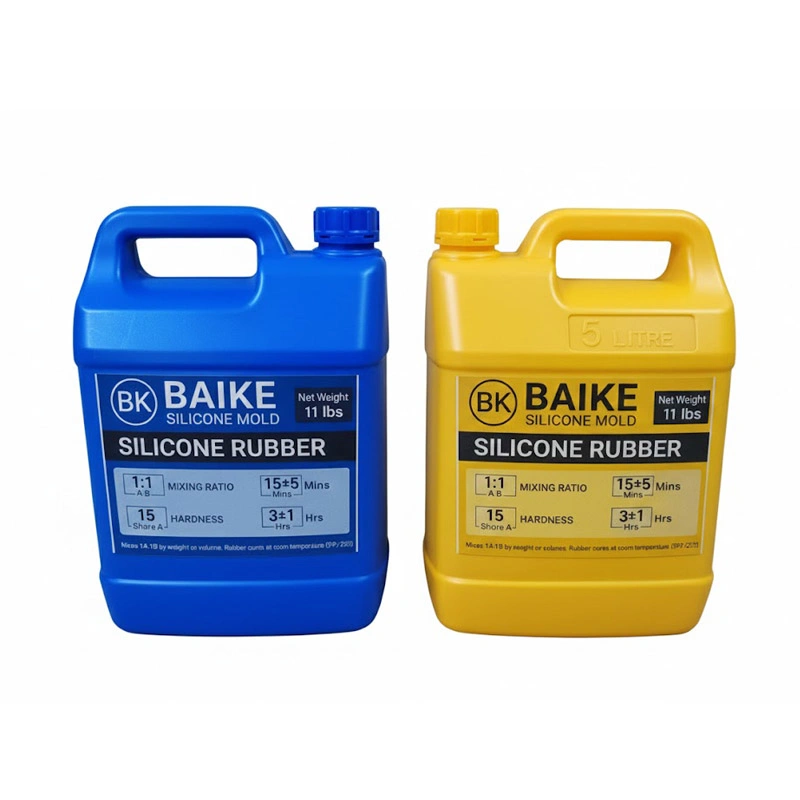
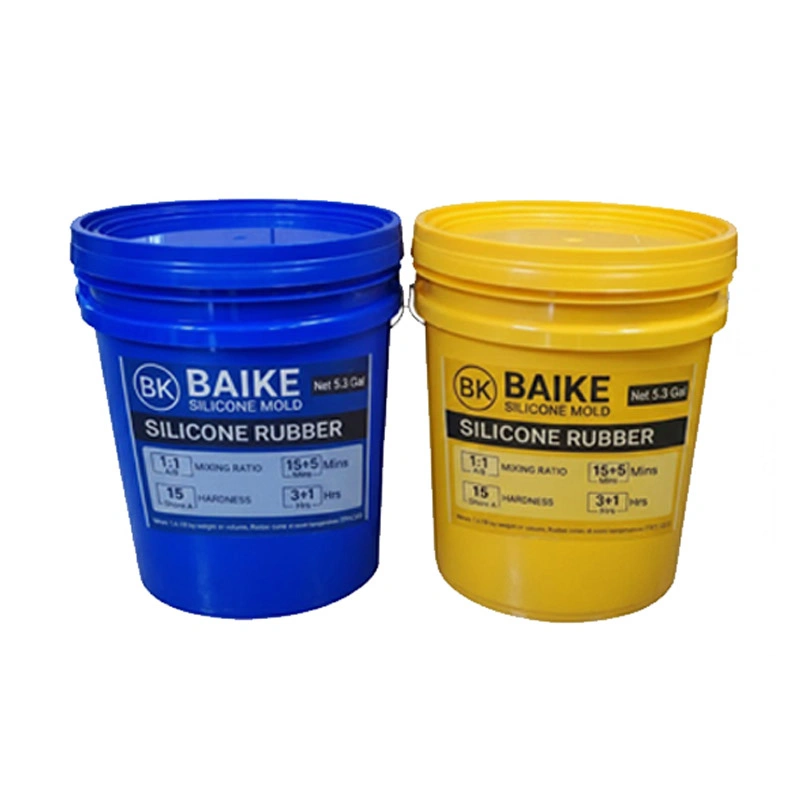
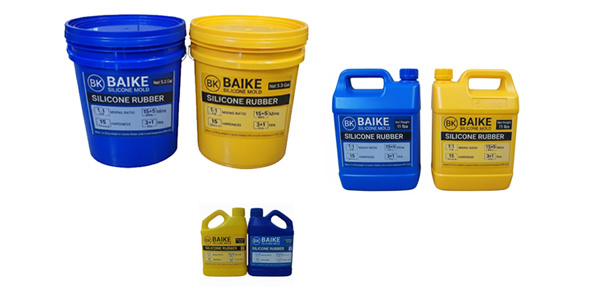
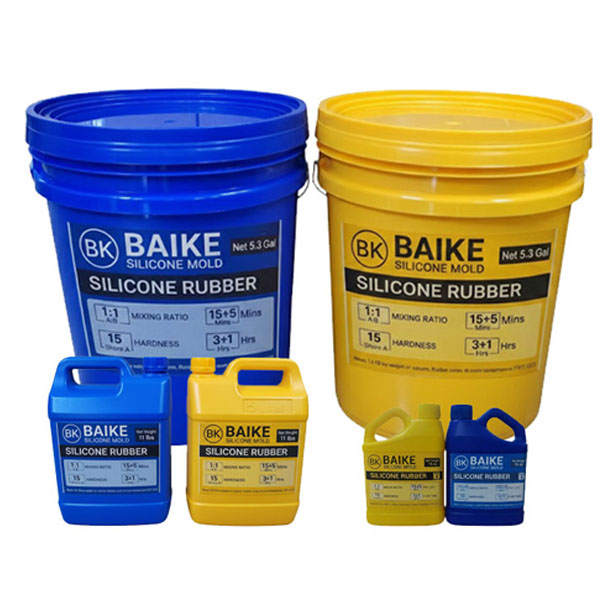
BKSilicone® BK-A Series is a high-performance, two-component platinum-cure silicone elastomer that cures at room temperature via an addition-catalyzed reaction.
This series has been used and validated in BKSilicone’s own factory for many years as a standard production material for silicone mold manufacturing. It features a 1:1 mixing ratio by weight, low initial viscosity with natural self-degassing behavior, and fast room-temperature curing, enabling efficient processing with minimal equipment.
2. Features
- Platinum-catalyzed addition cure system: Clean curing at room temperature with no by-products.
- Simple 1:1 mixing ratio by weight: Ensures consistent and repeatable processing.
- Low initial viscosity: Good flowability enables easy pouring and natural self-degassing behavior.
- No chemical shrinkage: Provides excellent dimensional stability after curing.
- High elasticity & Tear strength: Supports reliable demolding and long mold service life.
- Excellent Chemical Resistance: Compatible with polyurethane, epoxy, polyester resins, wax, and gypsum.
3. Applications
BKSilicone® BK-A Series is designed for professional mold making and casting applications where softness, flexibility, and reliable demolding are required. This series has been extensively used and validated in BKSilicone’s own factory production.
-
Candle Molds
Silicone molds for pillar candles, container candles, and decorative candle designs requiring clean surface finish and stable demolding.
-
Concrete & Cement Molds
Flexible molds for small concrete items, architectural details, and decorative cement components.
-
Fondant & Cake Decorating
Molds for sugar paste, fondant, and cake decoration elements where fine detail reproduction is required. *Verify food-contact compliance per local regulations.
-
Plaster & Aroma Stone
Casting molds for gypsum, plaster, and aroma stone products with repeated production cycles.
-
Creative & Character Molds
Silicone molds for figurines, decorative objects, and custom creative designs with complex geometries.
-
Lightweight Mold Designs
Thin-wall and reduced-material molds optimized for cost efficiency while maintaining structural stability.
4. Processing Notes
- Batch Consistency: Always use Part A and Part B from the same production batch. If components from different batches must be mixed, conduct a small-scale test first.
- Compatibility Testing: A preliminary test is strongly recommended to confirm compatibility with specific substrates, mold materials, or additives prior to large-scale production.
- Mixing & Curing Conditions: For optimal performance, mix and cure at an ambient temperature of 20–30 °C (68–86 °F) with relative humidity below 50%.
- Minimum Application Temperature: Do not process below 15 °C (60 °F). Lower temperatures may significantly slow curing or result in incomplete crosslinking.
CURE INHIBITION WARNING
Platinum-cure silicone systems are sensitive to certain contaminants. Ensure all tools, containers, and model surfaces are clean. Avoid contact with materials containing:
- Sulfur (e.g., sulfur-based clays, latex gloves)
- Tin compounds (condensation-cure silicone rubbers)
- Amines (certain epoxy systems and curing agents)
- Unsealed LCD / DLP 3D printed resins
Contact with these materials may result in surface tackiness or incomplete curing. A small test cure is always recommended.
5. Safety Precautions
Under normal storage and handling conditions, this product is stable and does not present unusual hazards. Standard industrial hygiene and safety practices should be followed at all times.
- General: Keep out of reach of children. Use only as intended.
- Skin Contact: Wash thoroughly with soap and water after contact. Remove contaminated clothing if necessary.
- Eye Contact: Rinse immediately with clean water for at least 15 minutes. Seek medical attention if irritation persists.
- Inhalation: Ensure adequate ventilation during mixing and processing.
- Ingestion: Do not induce vomiting. Rinse mouth and seek medical attention promptly.
*For detailed health, safety, and regulatory information, please refer to the Material Safety Data Sheet (MSDS).
6. Storage & Shelf Life
- Storage Conditions
- Store in a cool, dry place at room temperature 15–25 °C (60–77 °F). Keep containers tightly closed and away from direct sunlight, moisture, acids, and bases.
- Shelf Life
- 24 months from the date of manufacture when stored in unopened original containers. Exposure to elevated temperatures may reduce shelf life.
- Opened Containers
- Reseal immediately after use to prevent contamination and moisture ingress. Use clean tools to avoid introducing cure inhibitors.