
Using silicone molds effectively requires proper preparation, controlled pouring, adequate curing, and gentle demolding techniques. Following best practices ensures consistent quality and extends mold lifespan. At BKSilicone, we provide casting guidance to help businesses achieve optimal results.
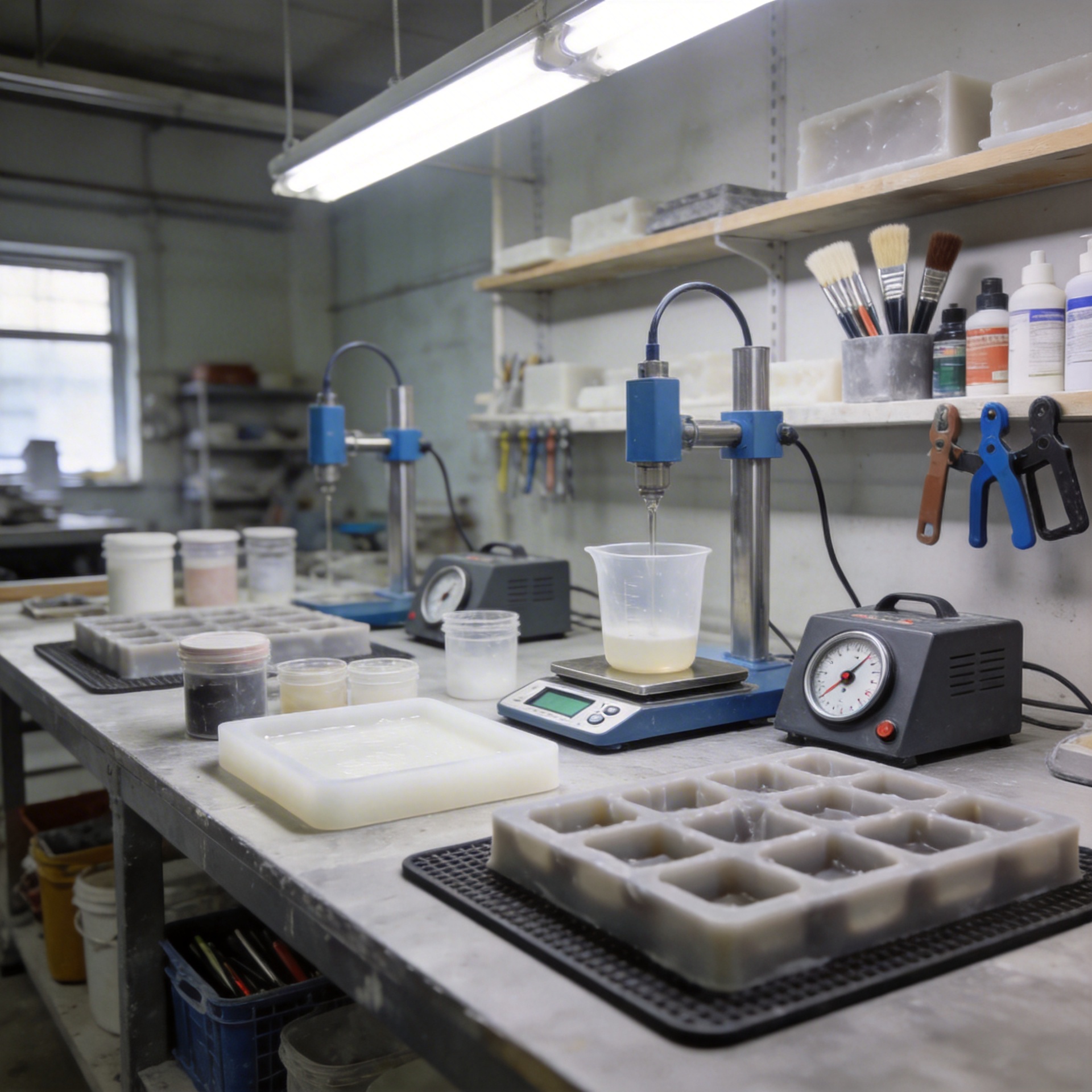
Why Best Practices Matter
Proper silicone mold casting techniques directly impact:
- Cast quality: Detail reproduction, surface finish, dimensional accuracy
- Mold lifespan: Gentle handling prevents tears and permanent damage
- Production consistency: Standardized processes ensure repeatable results
- Efficiency: Proper techniques reduce waste and rework
- Safety: Controlled processes prevent accidents and material issues
5 Best Practices for Silicone Mold Casting
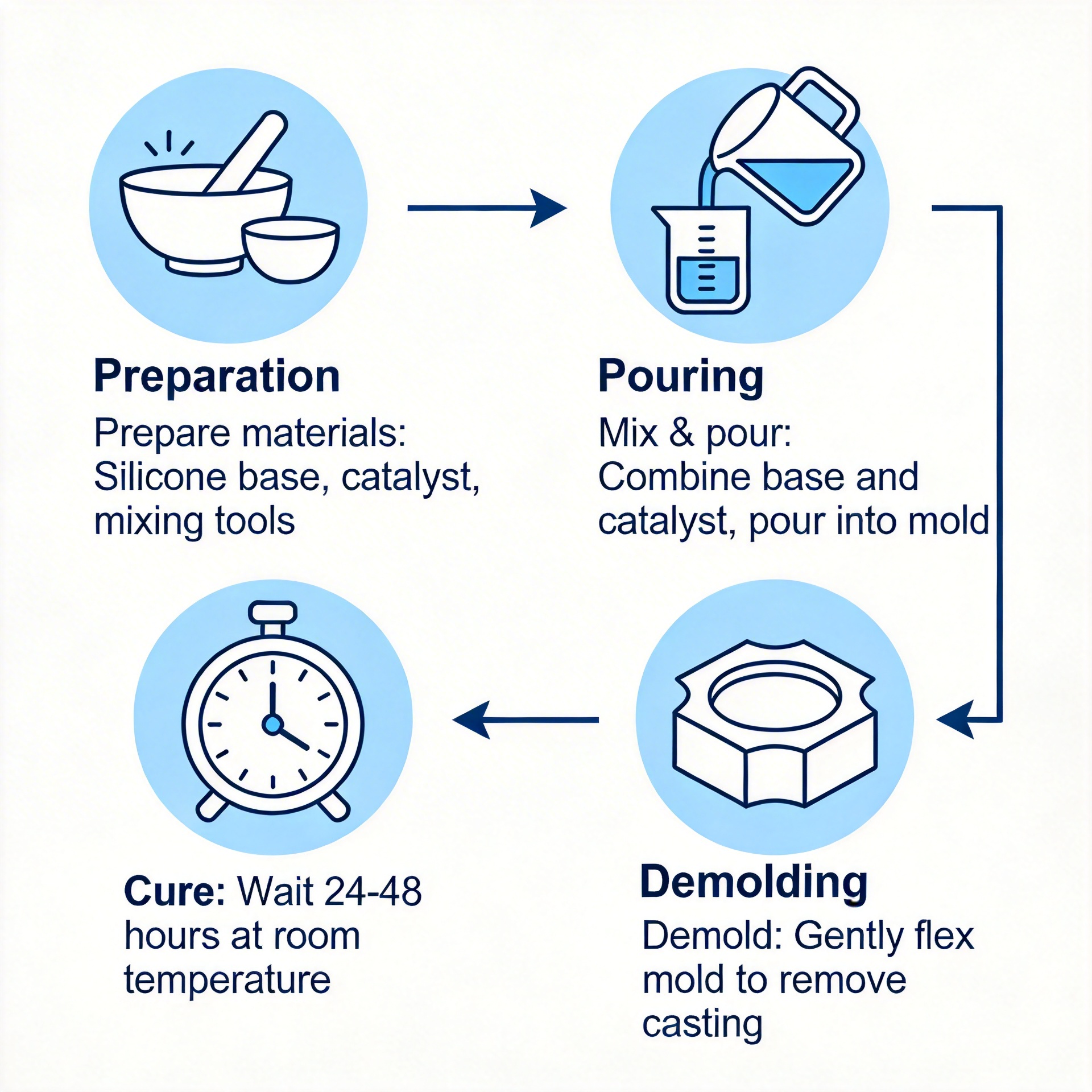
- Proper Material Preparation
Measure casting materials accurately according to manufacturer specifications. For resin casting, mix components at correct ratios. For candle casting, heat wax to optimal pouring temperature (160-180°F (71°C–82°C)). Test material compatibility with silicone before production-scale casting. Material temperature affects flow and detail reproduction – maintain consistent temperature throughout casting process. - Controlled Pouring Technique
Pour casting material slowly and steadily to minimize air bubbles. Fill mold in stages for deep cavities, allowing material to flow into details. Use vibration or vacuum degassing for bubble elimination. Avoid splashing or rapid pouring that traps air. Pour from one side to allow controlled filling. Maintain consistent pour rate throughout process. - Appropriate Curing Time
Allow adequate curing time based on casting material type. Candle wax: 2-4 hours cooling. Epoxy resin: 24-72 hours depending on formulation. Concrete: 24-48 hours initial cure, 7-28 days full cure. Avoid rushing curing process – incomplete curing causes defects. Maintain appropriate temperature during curing. Document curing times for quality consistency. - Gentle Demolding Technique
Flex silicone mold gently to release cast part. Peel mold away from cast part slowly, starting from edges. Avoid pulling, twisting, or forcing parts out of mold. For intricate designs, flex multiple times from different angles. Support mold structure during demolding to prevent tearing. Never use tools to pry parts from mold – this damages silicone surface. - Immediate Mold Cleaning
Clean mold immediately after demolding to prevent residue hardening. Use soft brushes and mild soap solution. Avoid abrasive tools that scratch silicone. Dry completely before next casting cycle. Inspect for damage before reuse. Document mold condition for wear tracking.
Temperature Control Guidelines
| Casting Material | Material Temperature | Mold Temperature | Curing Environment |
|---|---|---|---|
| Candle Wax | 160-180°F (71°C–82°C) | Room temperature | Room temperature, 2-4 hours |
| Epoxy Resin | Room temperature | Room temperature | Room temperature, 24-72 hours |
| Concrete | Ambient | Ambient | Ambient, 24-48 hours initial |
| Plaster | Room temperature | Room temperature | Room temperature, 1-2 hours |
| Food Materials | Per recipe | Per recipe | Per recipe, typically 1-4 hours |
Common Casting Mistakes
⚠️ Warning: These mistakes cause casting defects and mold damage.
- Mistake 1: Rushing material preparation – Incorrect ratios or temperature cause incomplete curing, air bubbles, or surface defects. Measure accurately and prepare thoroughly.
- Mistake 2: Pouring too quickly – Fast pouring traps air bubbles in details, causing voids in cast parts. Pour slowly and steadily.
- Mistake 3: Insufficient curing time – Demolding before complete curing causes distortion, damage, or material failure. Allow adequate time.
- Mistake 4: Rough demolding – Pulling or forcing parts out tears silicone and damages cast parts. Flex gently and peel slowly.
- Mistake 5: Skipping mold cleaning – Residue buildup affects next casting cycle quality. Clean after every casting.
- Mistake 6: Ignoring temperature control – Temperature extremes cause material issues and silicone degradation. Maintain appropriate ranges.
Checklist for Best Casting Practices
- ✅ Measure materials accurately according to specifications
- ✅ Prepare materials at correct temperature
- ✅ Test material compatibility before production
- ✅ Pour slowly and steadily to minimize bubbles
- ✅ Use vibration or degassing for bubble elimination
- ✅ Allow adequate curing time without rushing
- ✅ Maintain curing environment temperature
- ✅ Flex mold gently during demolding
- ✅ Peel silicone away slowly from cast part
- ✅ Clean mold immediately after demolding
- ✅ Inspect mold for damage before reuse
- ✅ Document casting parameters for consistency
Quality Indicators
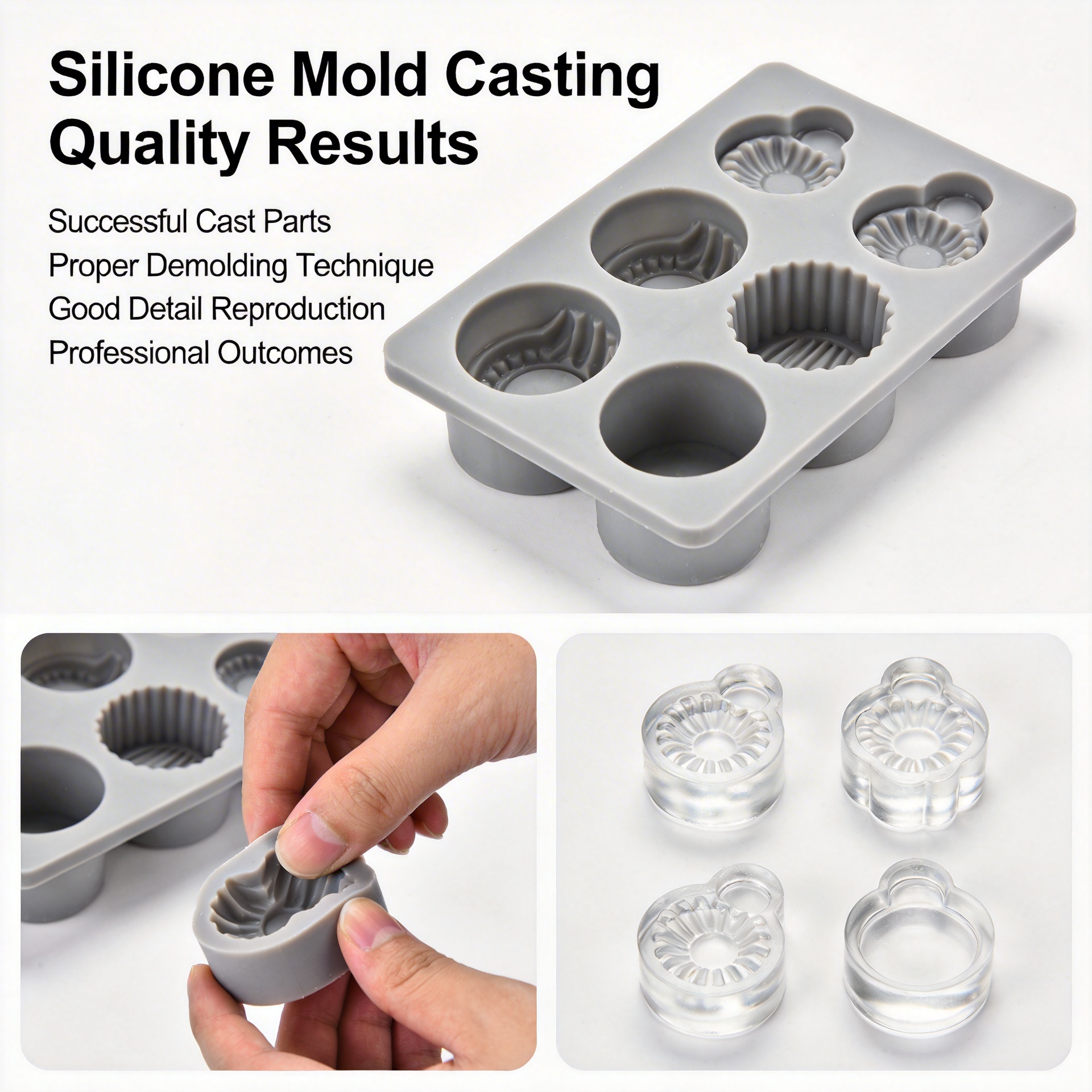
Successful casting shows these quality indicators:
- Detail reproduction: Fine details clearly visible in cast part
- Surface finish: Smooth surface without bubbles or defects
- Dimensional accuracy: Cast part matches mold dimensions accurately
- Color consistency: Uniform color throughout cast part
- Material integrity: Complete curing without soft spots or cracks
- Easy demolding: Part releases from mold without sticking
Conclusion
Following best practices for silicone mold casting ensures consistent quality, extends mold lifespan, and improves production efficiency. Proper preparation, controlled pouring, adequate curing, and gentle demolding prevent defects and protect mold investment.
For guidance on silicone mold basics and casting techniques, contact BKSilicone for technical consultation.