
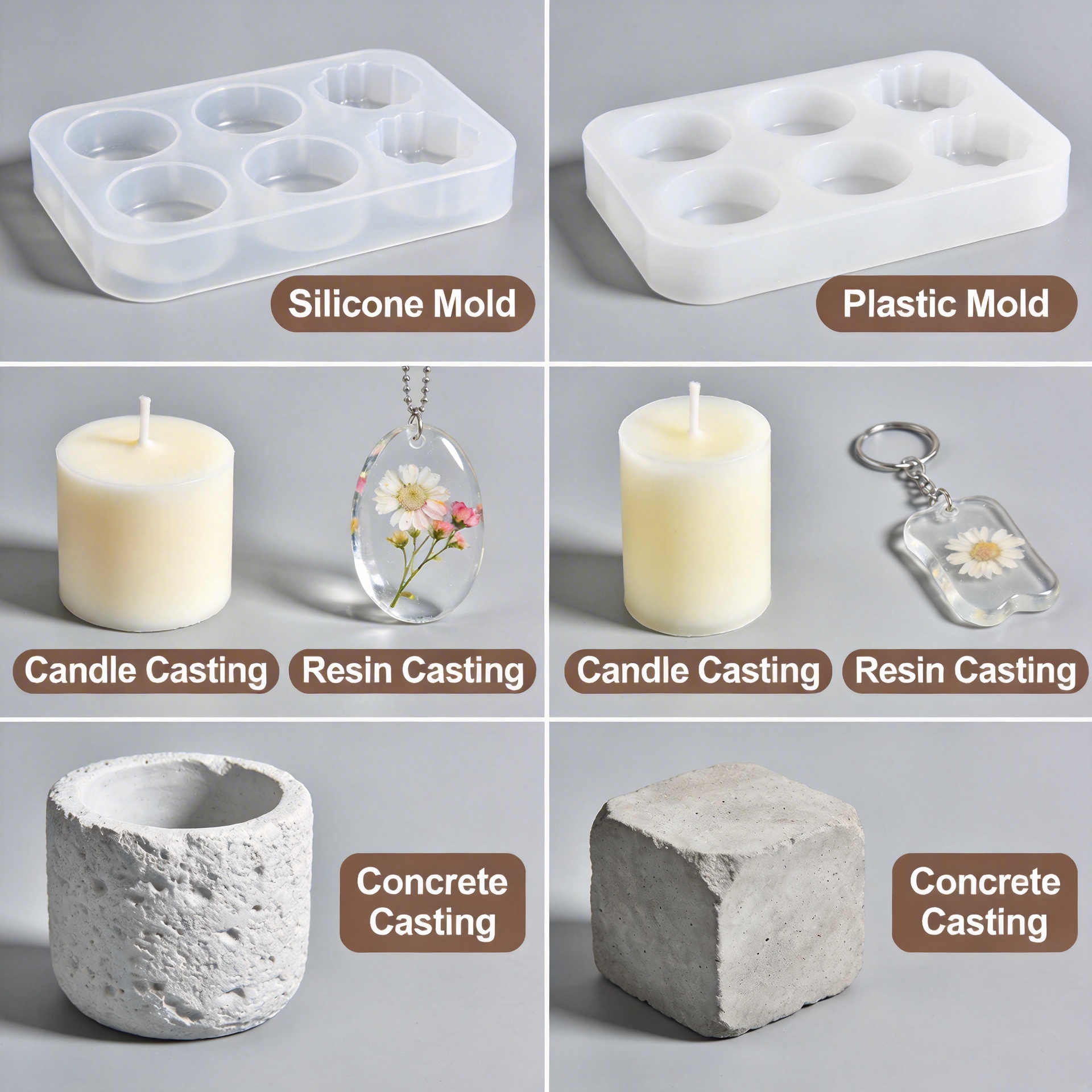
Silicone molds and plastic molds serve different casting applications. Understanding their differences helps businesses choose appropriate mold solutions for specific production needs. Explore silicone molds for candle, soap, resin, plaster and concrete casting for finished-mold options.
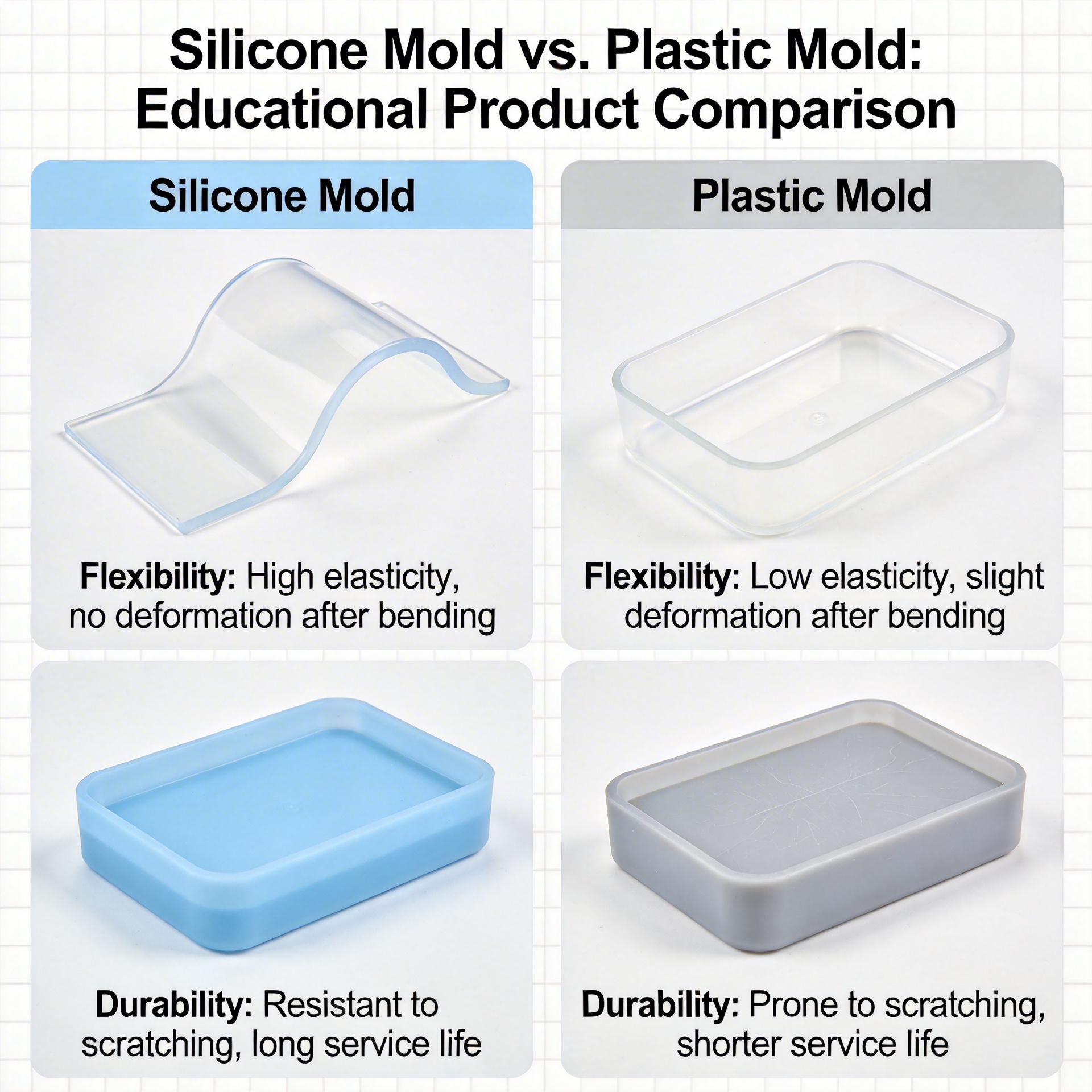
Silicone Mold vs Plastic Mold: Key Differences
| Feature | Silicone Mold | Plastic Mold |
|---|---|---|
| Flexibility | Highly flexible, easy demolding | Rigid, requires release agents |
| Durability | 500-1000 cycles | 10000+ cycles |
| Detail Reproduction | Excellent fine detail | Good detail, limited flexibility |
| Cost | Lower tooling cost | Higher tooling cost |
| Production Volume | Small to medium batches | Large volume production |
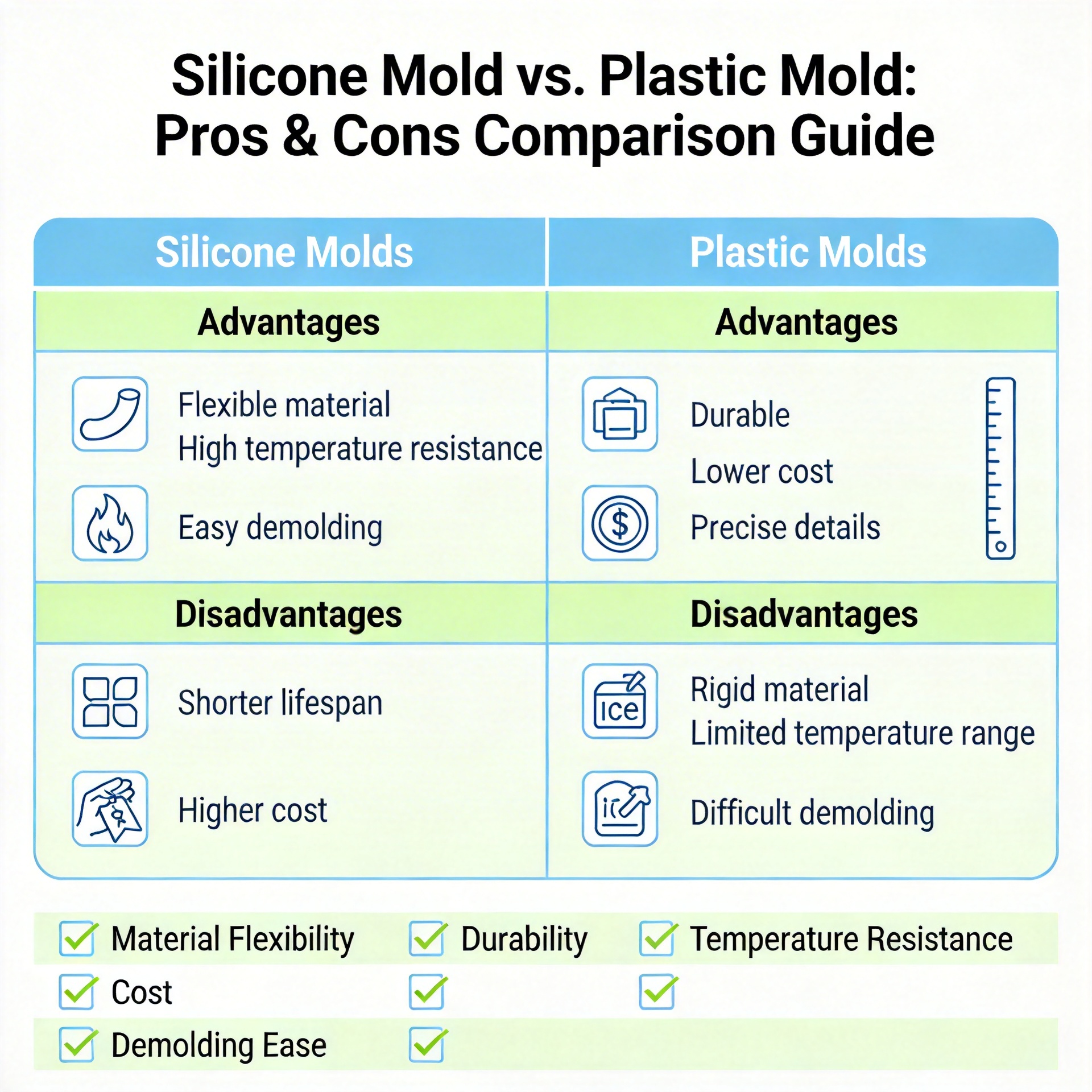
When to Choose Silicone Molds
- Complex designs with undercuts and intricate details
- Small to medium production volumes
- Custom designs requiring quick turnaround
- Low tooling budget requirements
- Multiple material compatibility (wax, resin, concrete)
When to Choose Plastic Molds
- High-volume production (10000+ units)
- Simple geometries without undercuts
- Long-term production contracts
- Budget available for expensive tooling
- Specific material requirements (certain plastics)
Conclusion
Silicone molds suit custom, small-batch production while plastic molds fit high-volume manufacturing. Choose based on production volume, design complexity, and budget. For custom silicone mold solutions, visit BKSilicone custom mold services.