
Proper silicone mold storage prevents deformation, contamination, and surface damage while extending usable mold life. Storage conditions directly impact mold lifespan and casting quality. At BKSilicone, we provide storage guidance to help businesses protect their mold investment.
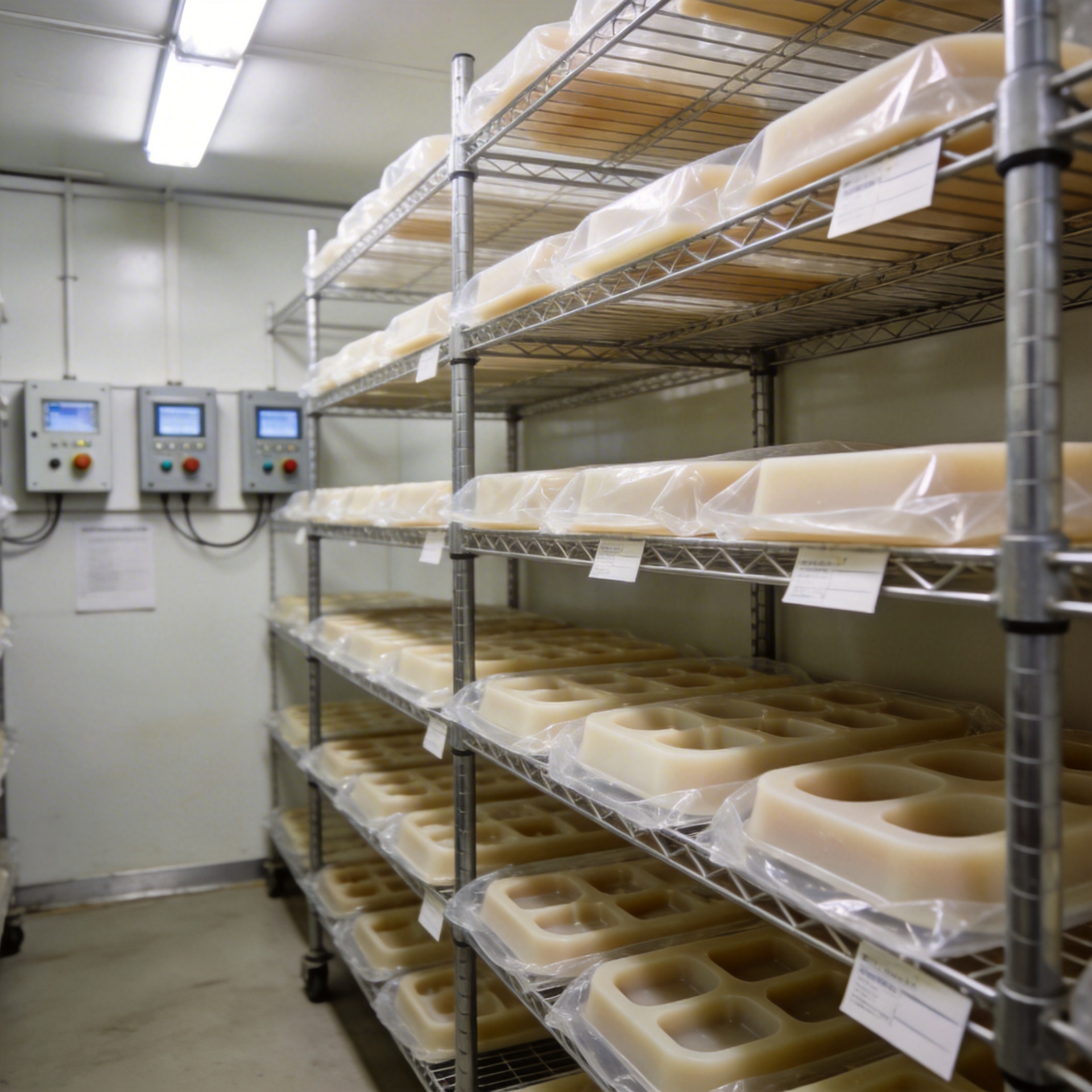
Why Proper Storage Matters
- Prevents deformation: Flat storage without compression maintains mold shape
- Extends lifespan: Climate-controlled conditions slow material degradation
- Protects details: Proper positioning prevents surface damage and detail loss
- Ensures consistency: Stored molds produce consistent cast quality
- Reduces replacement cost: Extended lifespan lowers replacement frequency
Storage Environment Requirements
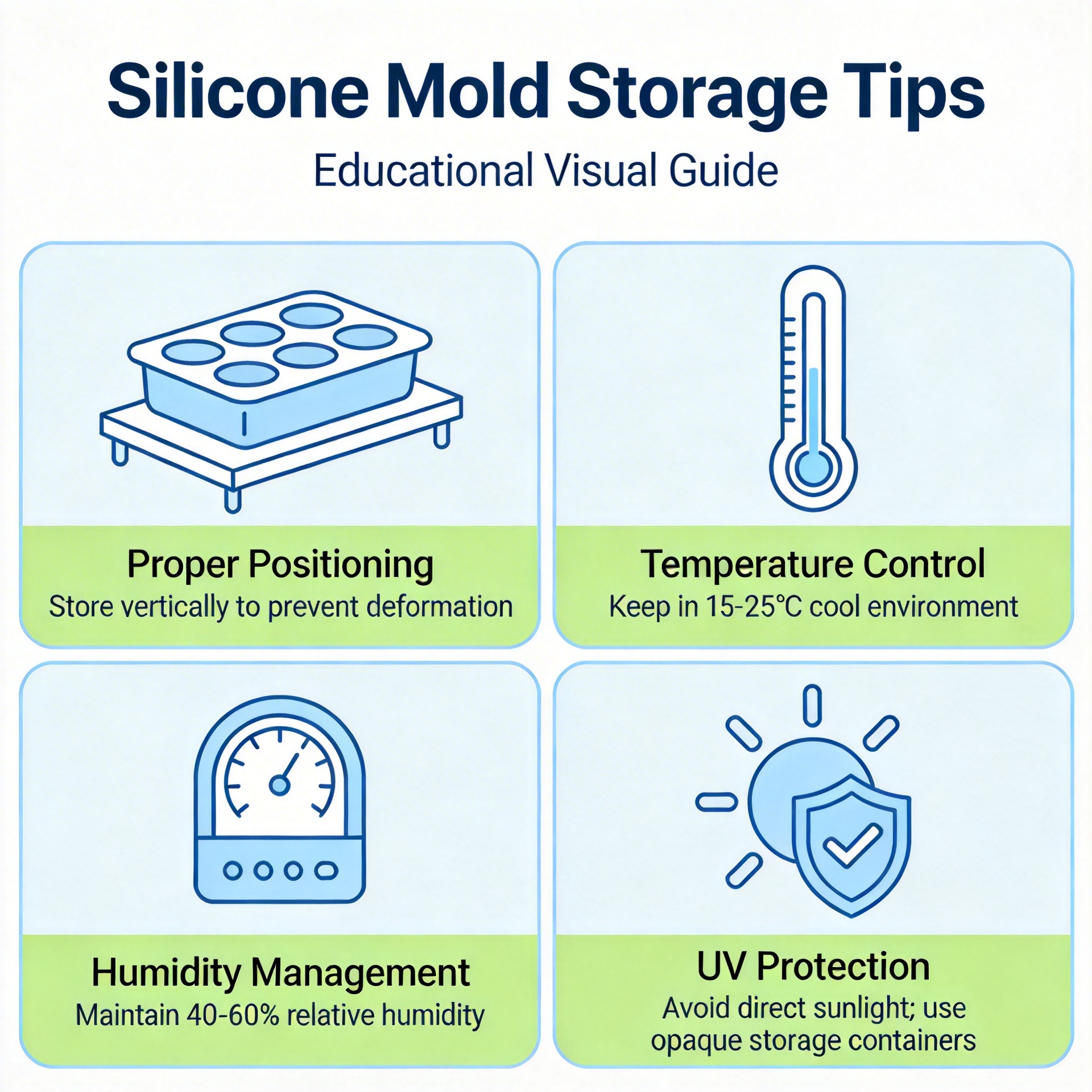
| Parameter | Ideal Range | Consequences of Deviation |
|---|---|---|
| Temperature | 15-25°C (59°F–77°F) | Cold causes brittleness; heat accelerates degradation |
| Humidity | 40-60% | High humidity causes moisture absorption; low causes static |
| Light Exposure | Minimal UV | UV light degrades silicone, causes discoloration |
| Air Quality | Clean, dust-free | Dust affects cast quality; fumes degrade silicone |
| Positioning | Flat, uncompressed | Stacking causes permanent deformation |
5 Storage Best Practices
- Clean Before Storage: Clean molds thoroughly after last casting cycle. Remove all residue, wash with mild soap, rinse completely. Dry thoroughly – moisture causes issues during storage. Never store wet or dirty molds.
- Position Flat: Store molds flat on shelves or in containers. Avoid stacking heavy items on molds. Support mold structure to prevent sagging. Complex molds may require internal support during storage.
- Use Protective Covers: Cover molds with dust-free cloth or plastic covers. Protect from UV exposure and dust accumulation. Avoid covers that trap moisture. Use breathable covers for long-term storage.
- Climate Control: Maintain consistent temperature and humidity. Avoid temperature fluctuations that stress silicone. Monitor storage environment regularly. Use dehumidifiers if humidity exceeds 60%.
- Regular Inspection: Inspect stored molds monthly. Check for deformation, surface damage, or contamination. Document condition changes over time. Replace molds showing degradation signs proactively.
Common Storage Mistakes
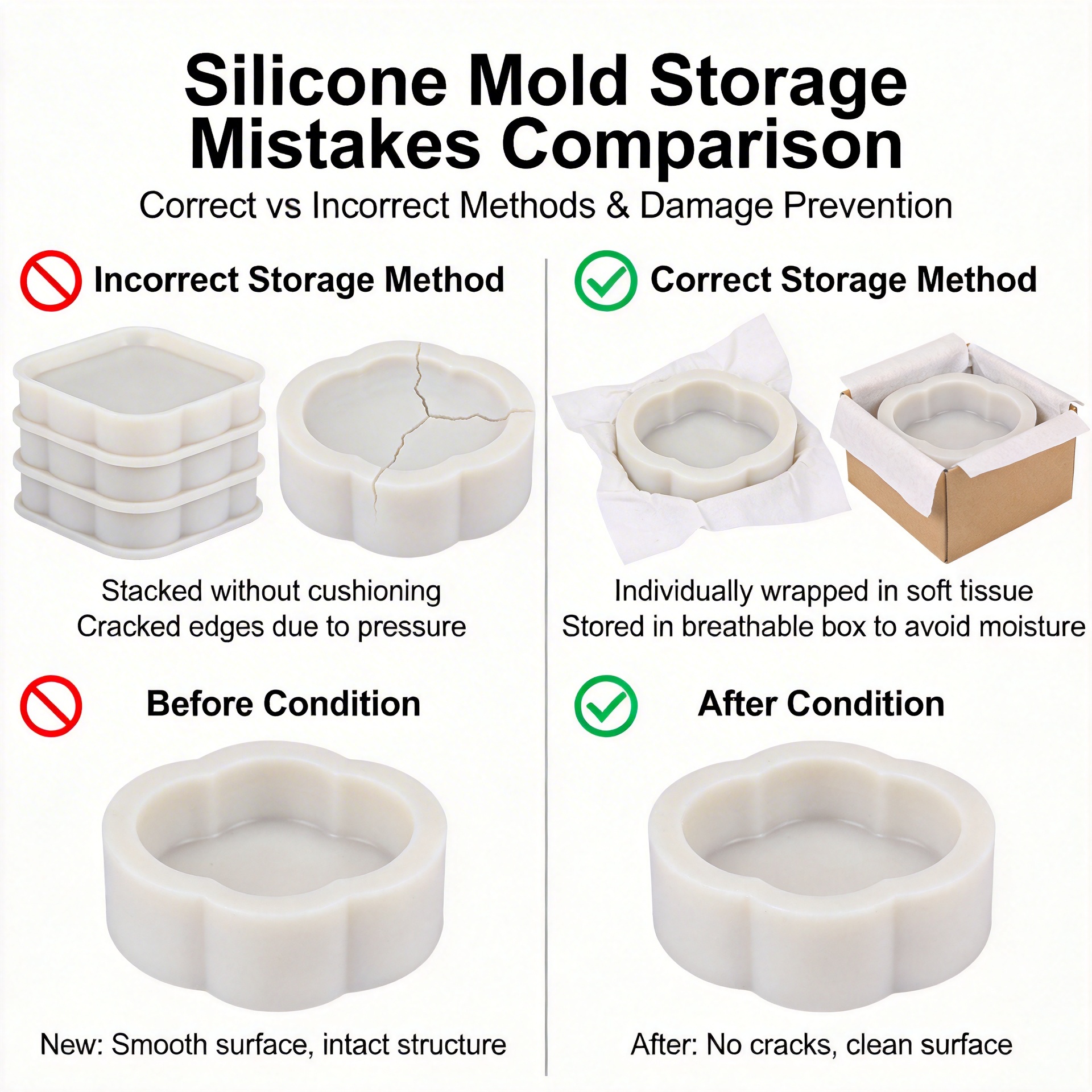
⚠️ Warning: These mistakes cause mold damage and reduced lifespan.
- Mistake 1: Storing wet molds – Moisture promotes mold growth and material degradation. Dry completely before storage.
- Mistake 2: Stacking heavy items – Weight causes permanent deformation. Store flat without compression.
- Mistake 3: Exposing to sunlight – UV light degrades silicone over months. Store in shaded areas or use covers.
- Mistake 4: Ignoring temperature control – Temperature extremes damage silicone. Maintain 15-25°C (59°F–77°F) range.
- Mistake 5: Skipping inspection – Damage progresses unnoticed. Inspect stored molds monthly.
- Mistake 6: Poor air circulation – Stagnant air causes moisture buildup. Ensure adequate ventilation.
- Mistake 7: Contaminated storage area – Dust and debris affect mold surface. Keep storage area clean.
Storage Checklist
- ✅ Clean molds thoroughly before storage
- ✅ Dry completely (2-4 hours minimum)
- ✅ Position flat without compression
- ✅ Use protective covers (dust-free, breathable)
- ✅ Maintain 15-25°C (59°F–77°F) temperature
- ✅ Control humidity 40-60%
- ✅ Protect from UV exposure
- ✅ Ensure adequate ventilation
- ✅ Keep storage area clean
- ✅ Inspect monthly for damage
- ✅ Document mold condition
- ✅ Plan replacement timeline
Storage Duration Guidelines
| Storage Duration | Inspection Frequency | Special Considerations |
|---|---|---|
| Short-term (1-4 weeks) | Weekly | Standard storage conditions |
| Medium-term (1-6 months) | Monthly | Climate monitoring, protective covers |
| Long-term (6+ months) | Monthly, detailed quarterly | Climate control essential, internal support for complex molds |
Conclusion
Proper silicone mold storage requires climate-controlled environments, flat positioning, protective covers, and regular inspection. Following storage best practices extends mold lifespan by 50-100% compared to poor storage conditions.
For guidance on silicone mold basics and storage best practices, contact BKSilicone for technical consultation.