Silicone Mold Materials Overview
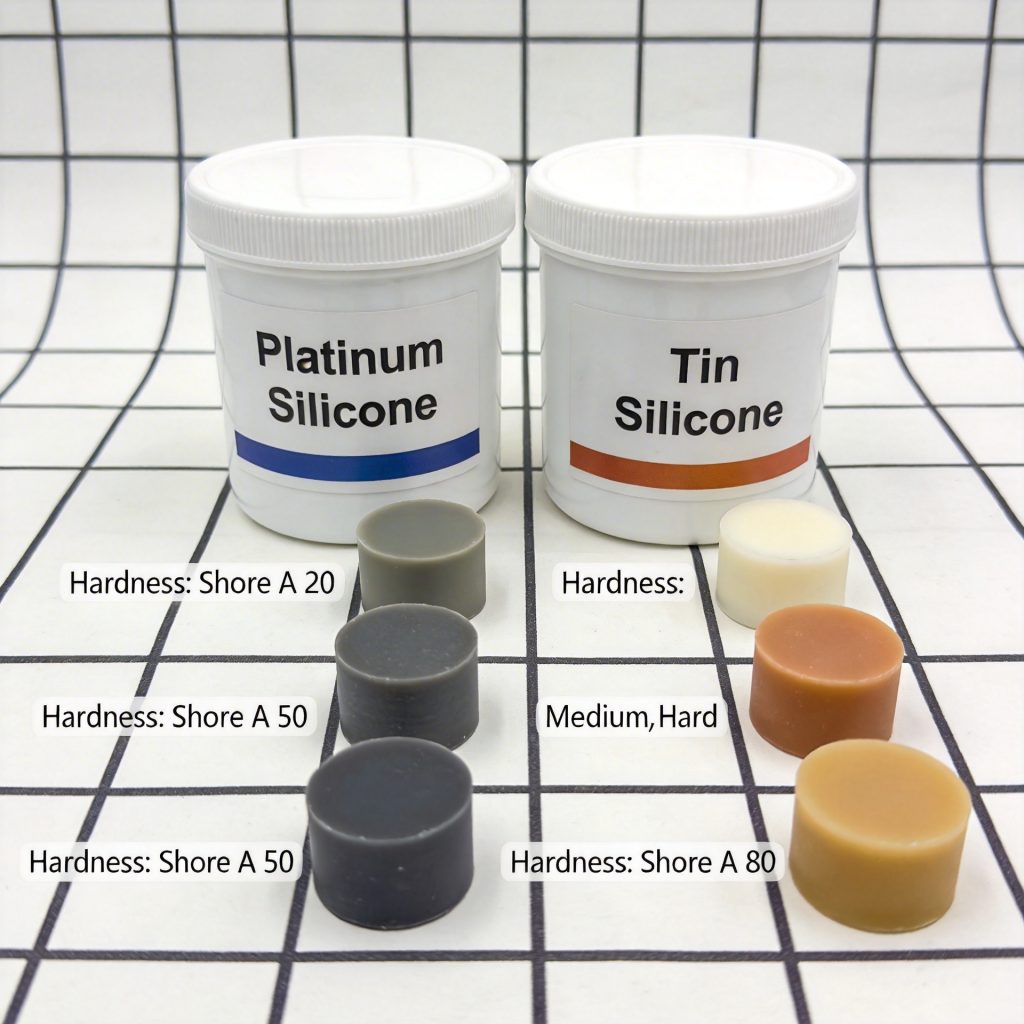
Choosing the right silicone mold material affects mold durability, casting quality, and production cost. The two main categories are platinum cure silicone and tin cure silicone. Each has different properties, hardness ranges, and suitable applications.
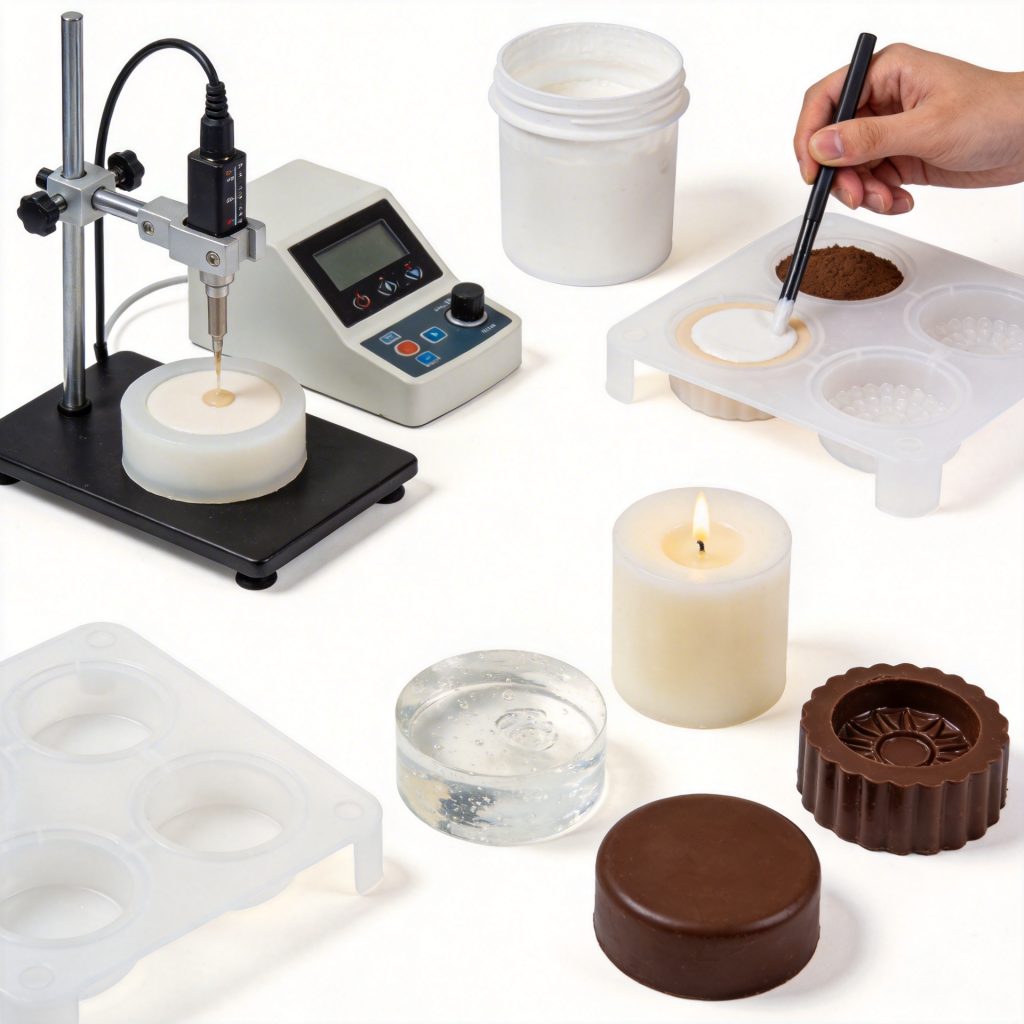
In this guide, we explain the key differences, hardness options, and how to select materials for candle, resin, chocolate, and concrete casting.
Silicone Material Types Comparison
| Property | Platinum Silicone | Tin Silicone |
|---|---|---|
| Cure Type | Addition cure | Condensation cure |
| Shelf Life | Long (2+ years) | Short (6-12 months) |
| Food Safe | Yes (FDA compliant) | No |
| Odor | Odorless | Slight odor |
| Shrinkage | Low (<1%) | Higher (1-3%) |
| Cost | Higher | Lower |
| Durability | 500+ casts | 50-100 casts |
| Inhibition Risk | Sensitive to sulfur, tin | Less sensitive |
Recommendation: For candle molds, chocolate molds, and food-contact applications, use platinum silicone. For industrial casting (concrete, resin prototypes), tin silicone is acceptable.
Silicone Hardness Explained
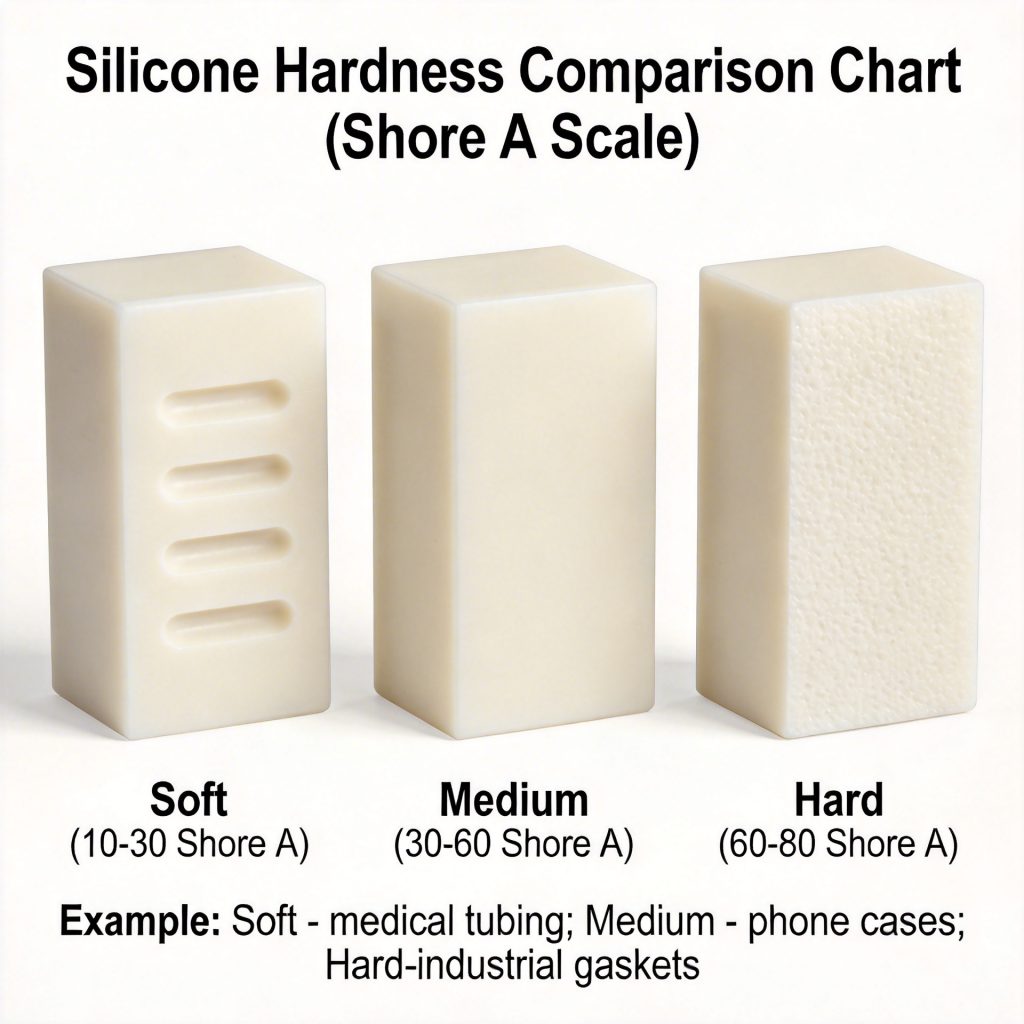
Silicone hardness is measured on the Shore A scale. Lower numbers = softer, more flexible. Higher numbers = harder, more rigid.
Hardness Selection Guide
| Shore A | Flexibility | Best For | Demold Difficulty |
|---|---|---|---|
| 0-10 | Very soft, extremely flexible | Simple shapes, flat molds | Very easy |
| 10-20 | Soft, flexible | Candles, simple 3D shapes | Easy |
| 20-30 | Medium soft | Detailed candles, resin, chocolate | Medium |
| 30-40 | Medium firm | Complex 3D, undercuts, concrete | Requires care |
| 40-50 | Firm, less flexible | Large molds, structural pieces | Difficult, may need cut |
Rule: More detailed molds need Shore A 20-30 for easy demold without damage. Flat or simple shapes can use Shore A 10-20. Concrete casting often needs Shore A 30-40 for structural support.
Material Selection by Application
| Application | Recommended Material | Recommended Hardness | Why |
|---|---|---|---|
| Candle Molds | Platinum silicone | Shore A 15-25 | Food-safe for wax, flexible for detailed shapes |
| Chocolate Molds | Platinum silicone (food grade) | Shore A 20-30 | FDA compliant, flexible for detailed designs |
| Resin Casting | Platinum or tin silicone | Shore A 20-30 | Detailed shapes, platinum for better durability |
| Concrete Molds | Tin silicone acceptable | Shore A 30-40 | Firm support for heavy casting, cost-effective |
| Soap Molds | Platinum silicone | Shore A 15-25 | Food-safe, flexible for detailed designs |
| OEM Production | Platinum silicone | Shore A 20-30 | 500+ casts durability, consistent quality |
Common Mistakes in Material Selection
Wrong material choice causes production issues:
Warning / Common Mistakes
| Mistake | Consequence | Correct Choice |
|---|---|---|
| Using tin silicone for food molds | Not food-safe, may leach chemicals | Use platinum silicone (FDA compliant) |
| Wrong hardness for detailed shapes | Difficult demold, mold damage | Use Shore A 20-30 for detailed 3D |
| Too soft for large molds | Mold deforms, casting distorted | Use Shore A 30-40 for structural support |
| Platinum silicone contacts sulfur materials | Inhibition, incomplete cure | Avoid sulfur-containing clays/adhesives |
| Old tin silicone (past shelf life) | Poor cure, weak mold | Check shelf life, use fresh material |
| Mixing platinum and tin in same project | Cross-contamination, cure failure | Keep tools separate, use dedicated mixing |
Warning: Platinum silicone is sensitive to contamination. Contact with sulfur-based clays, tin compounds, or certain adhesives causes cure inhibition. Always test a small batch before full production.
How BKSilicone Selects Materials
In our factory, we follow these material standards:
- Platinum silicone: Used for 80% of custom molds (food-safe, long durability)
- Food-grade certification: Available for all candle and chocolate molds
- Hardness range: Shore A 15-30 for most candle and detailed molds
- Testing protocol: Every new material batch tested before production
- Separate tools: Platinum and tin mixing tools kept separate
- Shelf life tracking: All silicone materials tracked for freshness
For platinum silicone details, see our platinum silicone guide. For comparison with tin silicone, see our platinum vs tin guide. For silicone basics, see our silicone mold overview.
Material Selection Checklist
Before choosing silicone material, check these items:
Pre-Selection Checklist
| Check | Why It Matters |
|---|---|
| ✅ Is casting material food-contact? | Yes → platinum silicone (food-safe) |
| ✅ How detailed is the shape? | Detailed 3D → Shore A 20-30; Simple → Shore A 10-20 |
| ✅ Expected production volume? | High volume → platinum (500+ casts); Low → tin acceptable |
| ✅ Budget constraints? | Tin silicone costs less, platinum costs more |
| ✅ Shelf life consideration? | Tin silicone shelf life 6-12 months; platinum 2+ years |
| ✅ Contamination risk? | Platinum sensitive to sulfur/tin → keep tools separate |
| ✅ Testing requirement? | Always test small batch before full production |
| ✅ Need OEM production? | Use platinum silicone for consistent durability |
Need Custom Silicone Mold Materials?
If you need help selecting the right silicone material for candle production, resin casting, chocolate molding, or OEM projects, BKSilicone provides factory-direct guidance and custom mold service. We use platinum cure silicone for food-safe applications and offer Shore A 15-40 hardness options. Contact us to discuss your material requirements.