
Silicone molds are durable casting tools, but their lifespan depends heavily on proper maintenance, storage, and usage techniques. A well-maintained silicone mold can last 500-1000 casting cycles, while neglected molds may fail after just 50-100 uses. At BKSilicone, we help businesses maximize their mold investment through proper care protocols and maintenance guidance.
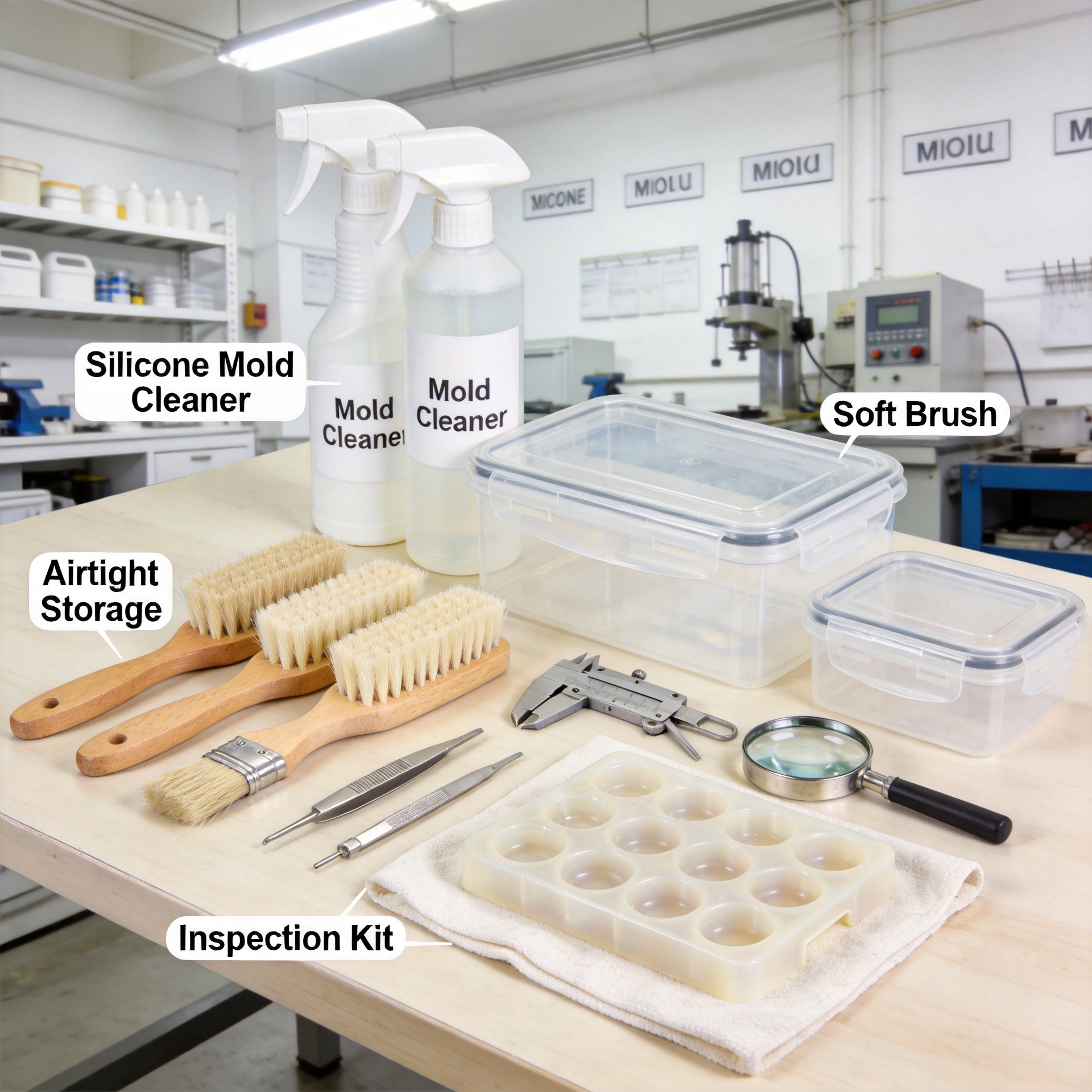
What Affects Silicone Mold Lifespan?
Multiple factors influence how long silicone molds last in production environments:
- Silicone material quality: Platinum cure silicone lasts longer than tin cure formulations
- Casting material compatibility: Some resins and materials degrade silicone faster
- Operating temperature: Excessive heat accelerates silicone deterioration
- Demolding technique: Rough handling causes tears and permanent damage
- Maintenance frequency: Regular cleaning prevents residue buildup and degradation
- Storage conditions: Climate-controlled storage prevents deformation and contamination
- Production volume: High-volume use requires higher-grade silicone
Understanding these factors helps businesses implement effective maintenance strategies and choose appropriate silicone grades for their production needs.
Silicone Mold Lifespan by Type
| Silicone Type | Expected Lifespan | Best Applications | Maintenance Frequency |
|---|---|---|---|
| Platinum Cure Silicone | 1000+ cycles | Food molds, high-detail casting, medical applications | Monthly inspection, weekly cleaning |
| Tin Cure Silicone | 200-500 cycles | Industrial casting, concrete, prototyping | Weekly inspection, after each casting session |
| Food-Grade Silicone | 1000+ cycles | Chocolate, candy, baking applications | Daily cleaning, monthly inspection |
| High-Temperature Silicone | 500-800 cycles | High-temp casting, automotive, industrial components | Weekly inspection, careful temperature monitoring |
| Budget Silicone | 50-200 cycles | Low-volume casting, simple designs, testing | After each use, frequent inspection |
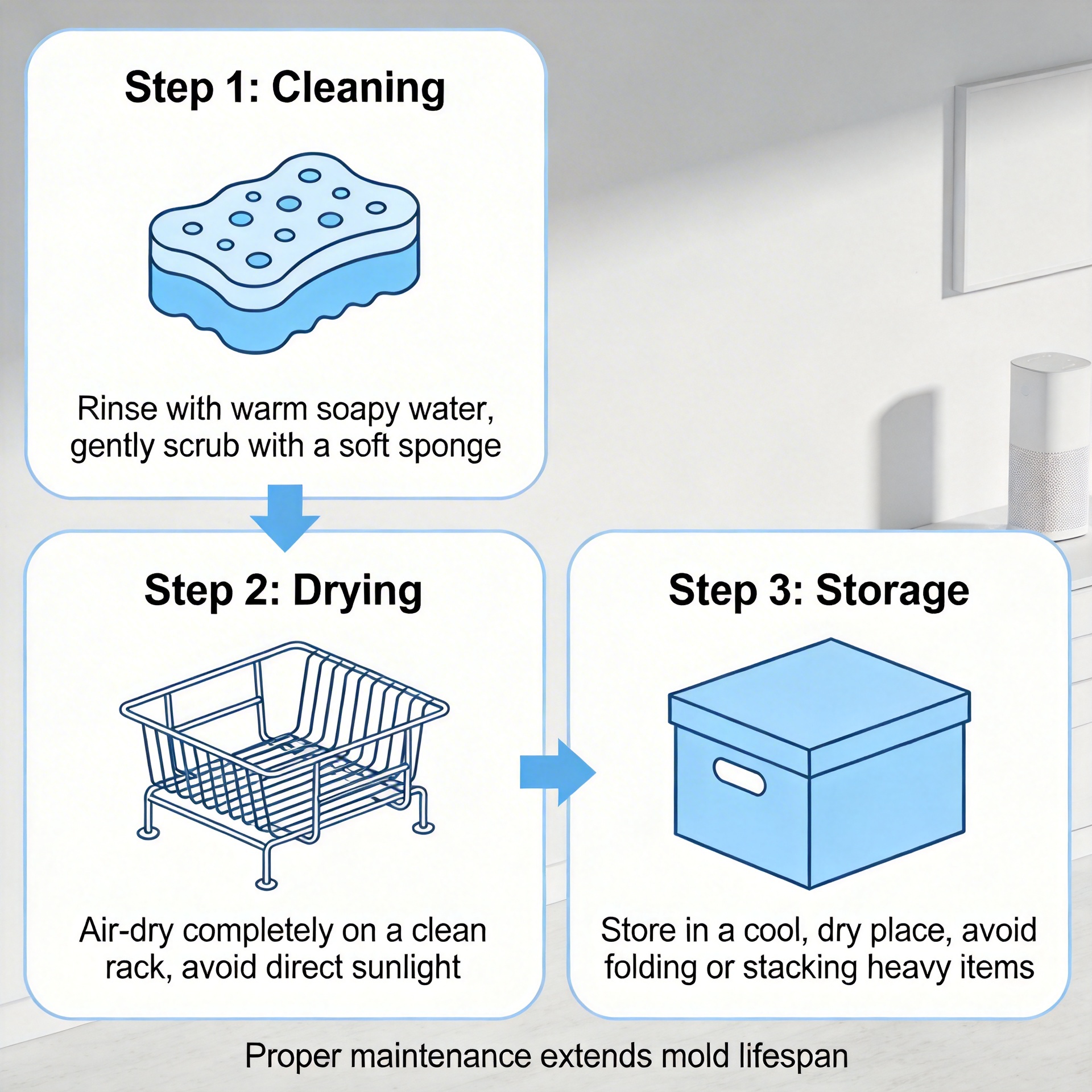
5-Step Mold Maintenance Process
Regular maintenance extends silicone mold lifespan significantly. Follow this proven 5-step process after each casting cycle:
- Remove Residue Immediately: After demolding, clean mold surface promptly. Residue hardens over time and becomes difficult to remove. Use soft brushes, mild soap solution, or appropriate solvents based on casting material. Avoid abrasive tools that scratch silicone surfaces.
- Inspect for Damage: Check mold for tears, cracks, permanent deformation, or surface degradation. Small tears grow with continued use. Document damage locations and track mold condition over time. Replace molds showing significant wear before catastrophic failure during production.
- Deep Clean Periodically: Weekly or monthly deep cleaning removes buildup invisible to casual inspection. Soak molds in appropriate cleaning solution, use compressed air to clear fine details, and rinse thoroughly. For food-grade molds, use food-safe cleaning agents only.
- Dry Completely: Moisture trapped in silicone causes issues during next casting cycle. Air dry molds in clean environment for 2-4 hours, or use compressed air for faster drying. Avoid heat drying unless silicone formulation specifically allows it.
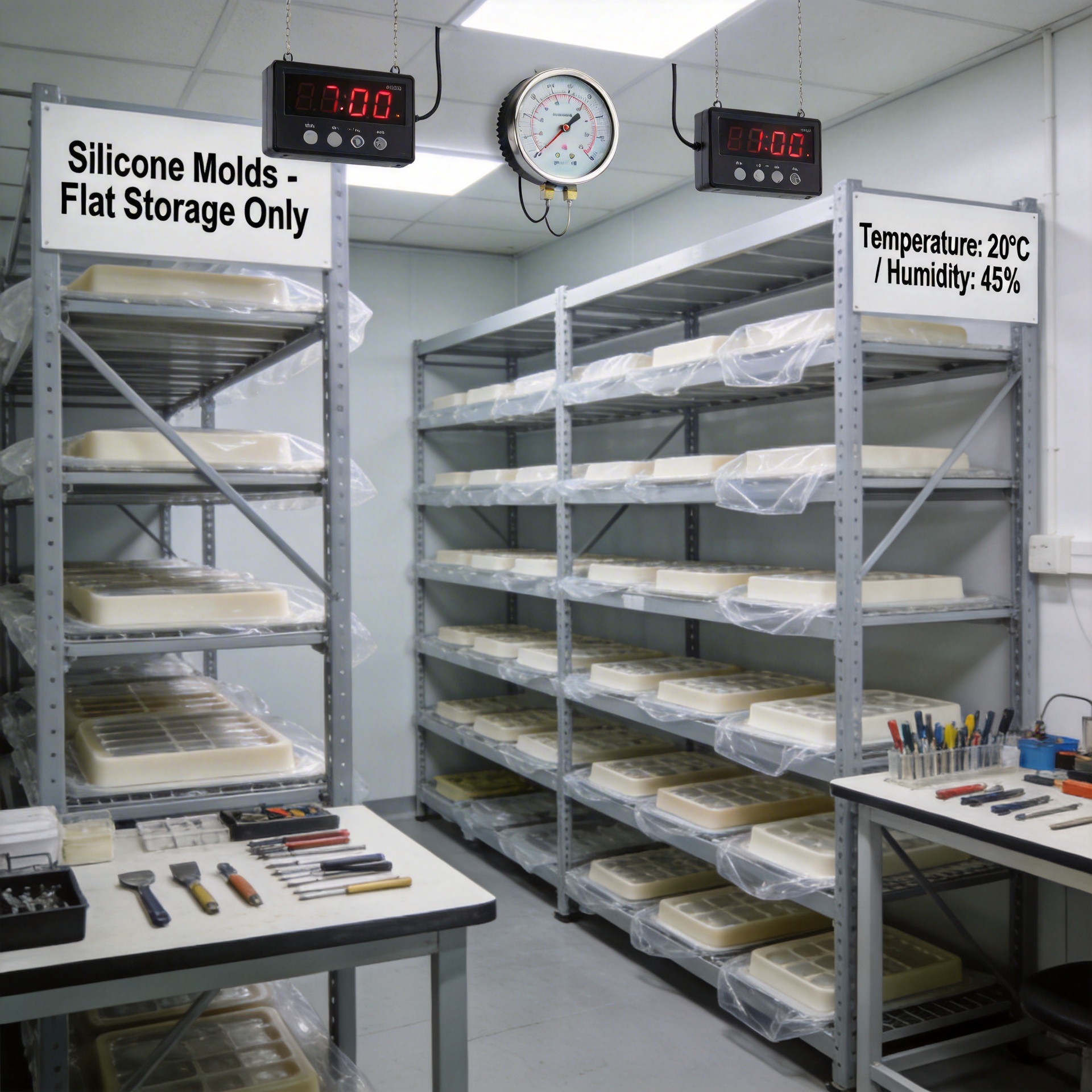
- Store Properly: Place dried molds in climate-controlled storage (15-25°C (59°F–77°F), 40-60% humidity). Store flat on shelves or in containers that prevent deformation. Avoid stacking heavy items on molds. Use protective covers to prevent dust accumulation and UV exposure.
Implementing this maintenance process consistently can extend silicone mold lifespan by 50-100% compared to minimal-care approaches.
Common Mistakes That Shorten Mold Life
⚠️ Warning: These mistakes cause premature mold failure and costly production disruptions.
- Mistake 1: Skipping cleaning between cycles – Casting residue accumulates, hardens, and bonds to silicone surface. Over time, buildup prevents proper demolding and degrades mold detail. Clean molds after every casting cycle.
- Mistake 2: Using abrasive cleaning tools – Wire brushes, scrapers, and abrasive pads scratch silicone surfaces. Scratches become stress points that lead to tears. Use soft brushes, silicone-safe sponges, or compressed air only.
- Mistake 3: Storing molds under weight – Heavy items stacked on molds cause permanent deformation. Deformed molds produce distorted cast parts. Store molds flat without compression.
- Mistake 4: Exposing molds to UV light – Direct sunlight and UV exposure degrade silicone over months. Discoloration indicates UV damage. Store molds in covered containers or shaded areas.
- Mistake 5: Ignoring temperature limits – Exceeding silicone temperature tolerance causes permanent softening or hardening. Check material specifications before casting. Use appropriate silicone grade for your operating temperature.
- Mistake 6: Rough demolding techniques – Pulling, twisting, or forcing parts out of molds causes tears and permanent damage. Flex molds gently and peel silicone away from cast parts slowly.
- Mistake 7: Using incompatible casting materials – Some resins, solvents, and materials react with silicone, causing chemical degradation. Test material compatibility before production-scale casting.
Checklist for Extending Mold Lifespan
- ✅ Choose appropriate silicone grade for casting material and production volume
- ✅ Clean molds after every casting cycle without delay
- ✅ Inspect molds weekly for damage (tears, cracks, deformation)
- ✅ Document mold condition to track wear patterns
- ✅ Deep clean monthly with appropriate cleaning solutions
- ✅ Dry molds completely before storage (2-4 hours air drying)
- ✅ Store in climate-controlled environment (15-25°C (59°F–77°F), 40-60% humidity)
- ✅ Keep molds flat without compression or heavy stacking
- ✅ Protect from UV exposure using covers or shaded storage
- ✅ Monitor operating temperature within silicone tolerance range
- ✅ Test material compatibility before production-scale casting
- ✅ Train operators on proper demolding techniques
- ✅ Plan replacement timeline based on mold lifespan and production schedule
When to Replace Silicone Molds
Even well-maintained silicone molds eventually require replacement. Watch for these indicators:
- Visible tears or cracks: Even small tears grow during continued use, eventually causing catastrophic failure
- Permanent deformation: Molds that no longer return to original shape produce distorted cast parts
- Surface degradation: Sticky, hardened, or discolored silicone indicates material breakdown
- Detail loss: Fine details no longer reproduce clearly in cast parts
- Demolding difficulty: Parts stick increasingly despite proper release techniques
- Cycle count approach: Replace molds proactively when approaching expected cycle limit
Proactive replacement prevents production disruptions. At BKSilicone, we recommend ordering replacement molds when existing molds reach 70-80% of expected lifespan.
Proper Storage Conditions
Storage environment significantly impacts silicone mold lifespan:
| Parameter | Ideal Range | Consequences of Deviation |
|---|---|---|
| Temperature | 15-25°C (59°F–77°F) | Extreme cold causes brittleness; excessive heat accelerates degradation |
| Humidity | 40-60% | High humidity promotes mold growth and moisture absorption; low humidity causes static buildup |
| Light Exposure | Minimal UV exposure | UV light degrades silicone over time, causing discoloration and weakening |
| Air Quality | Clean, dust-free | Dust contamination affects cast part quality; chemical fumes can degrade silicone |
| Physical Storage | Flat, uncompressed | Stacking weight causes permanent deformation; improper support distorts mold shape |
Investing in proper storage infrastructure protects mold investment and ensures consistent production quality.
Maintenance Costs vs. Replacement Costs
Proper maintenance is cost-effective compared to premature replacement:
| Scenario | Annual Cost | Mold Lifespan | Total Cost per 5 Years |
|---|---|---|---|
| Proper Maintenance | $200-300 (cleaning supplies, storage) | 1000+ cycles | $1000-1500 + replacement every 5 years |
| Minimal Maintenance | $50-100 (basic cleaning only) | 200-400 cycles | $250-500 + replacement every 1-2 years |
| No Maintenance | $0 | 50-100 cycles | $0 + replacement every 6-12 months |
Maintenance investment returns 3-10x through extended mold lifespan and reduced replacement frequency.
Conclusion
Extending silicone mold lifespan requires consistent maintenance, proper storage, and appropriate usage techniques. By implementing regular cleaning protocols, inspecting molds for damage, and maintaining climate-controlled storage, businesses can maximize mold investment and ensure production reliability.
For guidance on silicone mold basics and maintenance best practices, consult BKSilicone’s technical resources. Our custom silicone mold solutions include maintenance training and replacement planning support.
Need help establishing mold maintenance protocols? Contact BKSilicone for technical consultation and care guidance tailored to your production environment.