Silicone mold durability depends on material quality, curing conditions, operating temperature, usage frequency, and maintenance practices. Understanding these factors helps businesses choose appropriate silicone grades and implement practices that extend mold lifespan.
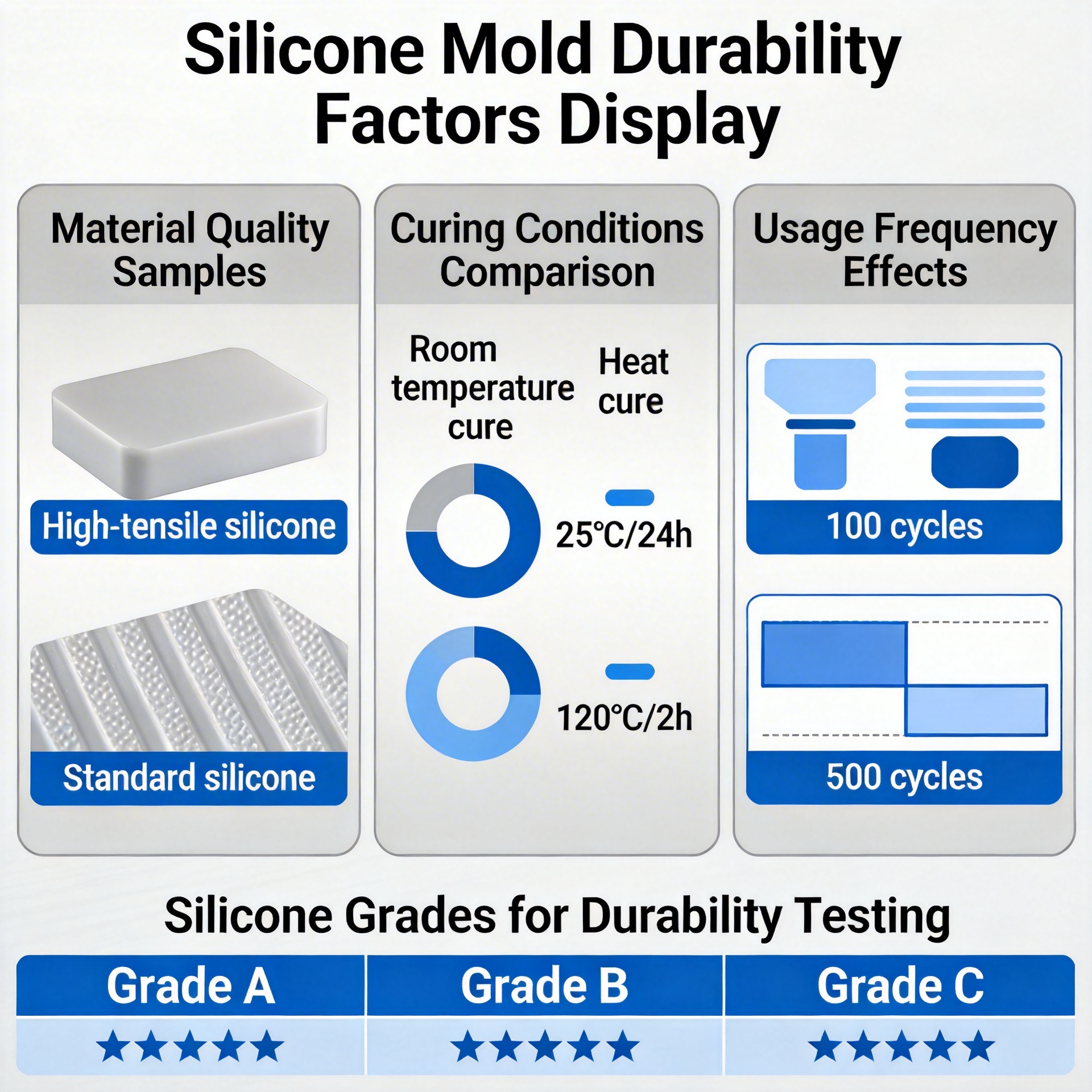
Key Durability Factors
- Silicone material quality: Grade selection determines base durability potential
- Curing conditions: Proper curing maximizes material strength
- Operating temperature: Temperature extremes degrade silicone faster
- Usage frequency: High-volume casting stresses silicone repeatedly
- Casting material compatibility: Incompatible materials chemically degrade silicone
- Demolding technique: Rough handling causes tears and permanent damage
- Maintenance frequency: Regular care extends lifespan significantly
- Storage conditions: Climate-controlled storage prevents degradation
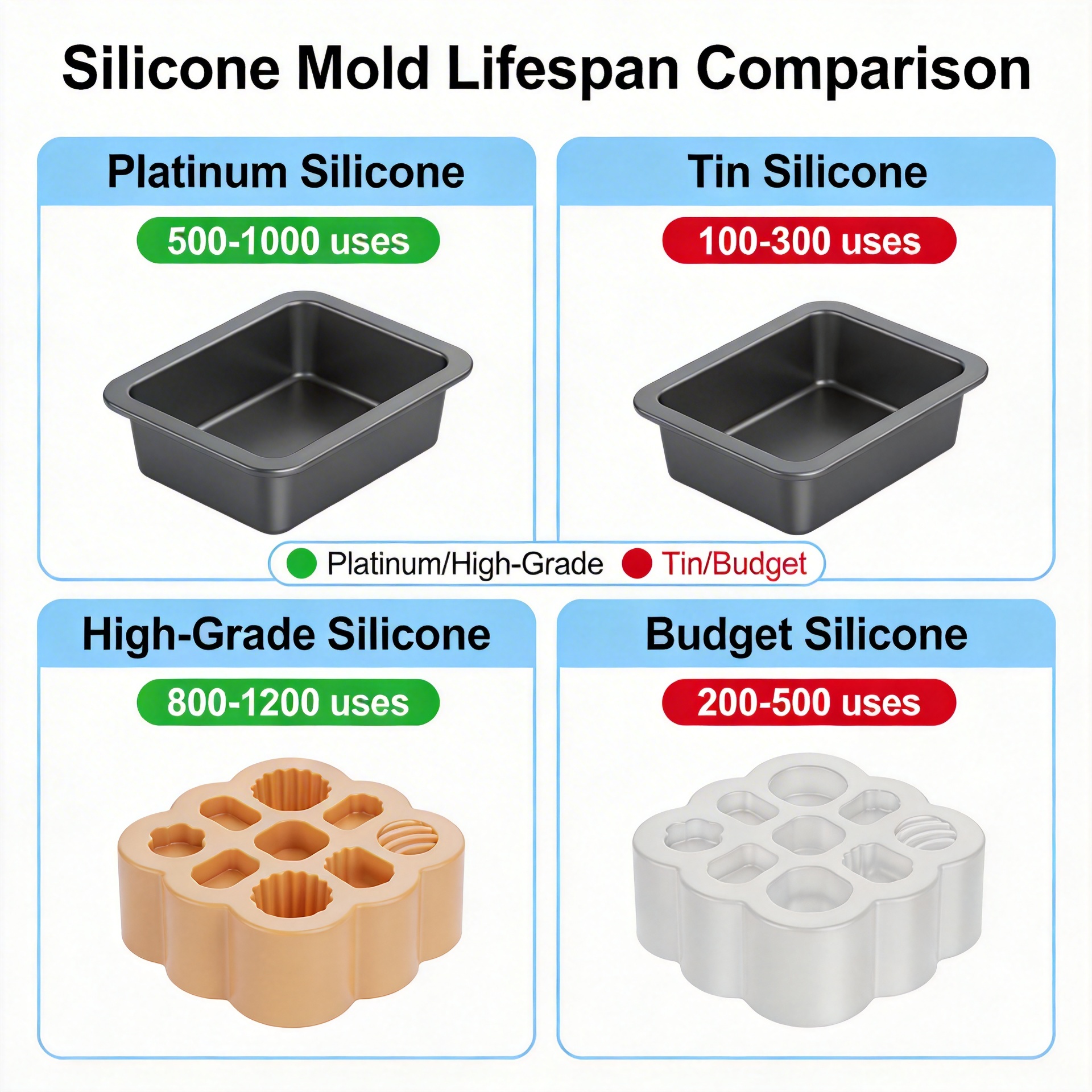
Silicone Grade vs Durability
| Silicone Grade | Expected Lifespan | Cost per lb | Best Applications |
|---|---|---|---|
| Platinum Cure (High-grade) | 1000+ cycles | $50-100 | Food molds, medical, high-detail |
| Platinum Cure (Standard) | 800-1000 cycles | $40-60 | Commercial casting, custom designs |
| Tin Cure (Industrial) | 500-800 cycles | $30-50 | Concrete, industrial casting |
| Tin Cure (Budget) | 200-500 cycles | $20-40 | Prototyping, simple designs |
| Budget Silicone | 50-200 cycles | $15-25 | Testing, low-volume, simple shapes |
How Each Factor Affects Durability
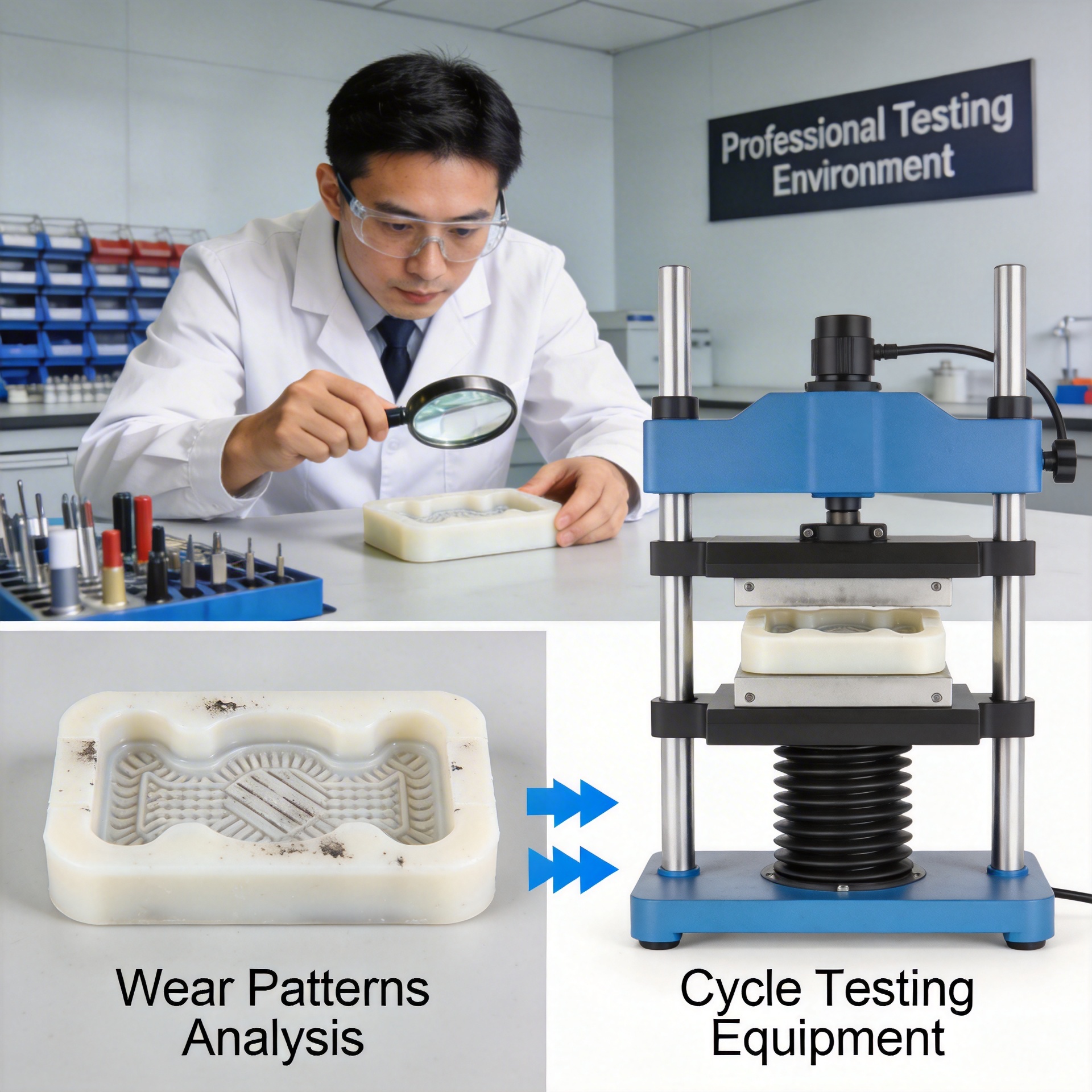
- Material Quality Impact
Higher-grade silicone formulations contain better polymers and additives that resist degradation. Platinum cure silicone resists heat and chemicals better than tin cure. Food-grade silicone meets FDA standards while maintaining durability. Budget silicone sacrifices durability for cost savings. - Curing Conditions Effect
Proper curing maximizes silicone strength potential. Incomplete curing leaves weak spots that fail under stress. Temperature during curing affects polymer formation. Curing time must follow manufacturer specifications. Accelerated curing risks incomplete polymerization. - Operating Temperature Range
Silicone has optimal operating temperature range. Exceeding upper limit causes softening and deformation. Extreme cold makes silicone brittle and prone to cracking. Repeated temperature cycling stresses silicone structure. Monitor temperature during casting process. - Usage Frequency Stress
Each casting cycle stresses silicone repeatedly. High-volume production accelerates wear patterns. Rest periods between cycles allow silicone recovery. Track cycle count to predict replacement timing. Match silicone grade to production volume requirements. - Material Compatibility
Incompatible casting materials chemically degrade silicone. Some resins react with tin cure formulations. Solvents in casting materials attack silicone surface. Test material compatibility before production. Use appropriate silicone grade for casting material. - Demolding Technique Impact
Gentle flexing prevents tear formation. Rough pulling causes permanent damage. Support mold structure during demolding. Train operators on proper technique. Document demolding-related damage patterns. - Maintenance Contribution
Regular cleaning removes residue that degrades silicone. Inspection catches damage before catastrophic failure. Proper storage prevents degradation between cycles. Maintenance adds 50-100% to expected lifespan.
Durability Warning Signs
⚠️ Monitor these indicators to prevent catastrophic failure.
- Surface degradation: Sticky or hardened areas indicate chemical breakdown
- Color changes: Discoloration suggests material degradation or UV damage
- Tear formation: Small tears grow with continued use
- Detail loss: Fine details no longer reproduce clearly
- Permanent deformation: Molds no longer return to original shape
- Demolding difficulty: Parts stick increasingly despite proper technique
- Surface cracking: Hairline cracks indicate brittleness or fatigue
Checklist for Maximizing Durability
- ✅ Choose appropriate silicone grade for application and volume
- ✅ Follow curing specifications exactly
- ✅ Maintain operating temperature within safe range
- ✅ Test material compatibility before production
- ✅ Use gentle demolding technique
- ✅ Clean after every cycle without delay
- ✅ Inspect weekly for damage signs
- ✅ Store in climate-controlled environment
- ✅ Track cycle count against expected lifespan
- ✅ Replace proactively at 70-80% of expected cycles
- ✅ Document condition changes over time
- ✅ Train operators on proper handling
Conclusion
Silicone mold durability depends on material quality, curing conditions, operating environment, and maintenance practices. Understanding these factors enables businesses to choose appropriate silicone grades and implement practices that maximize mold investment.
For guidance on silicone mold basics and durability optimization, contact BKSilicone for technical consultation.