A reliable Silicone Mold Maker does more than accept a design and quote a price. The stronger evidence appears before bulk production: feasibility questions, marked structural decisions, a defined sample standard, first-cast results, revision records, and clear production controls. This guide focuses on those records so buyers can judge whether a custom project is truly ready to move forward. For project development, see custom silicone mold development from CAD, drawings or samples.
Reliability at a glance
A dependable custom mold project leaves a clear trail of evidence before production begins.
Reliability is the ability to identify risk early, explain the selected mold structure, test the result, and keep the approved version consistent during production. Buyers should be able to see what was reviewed, what was approved, what remains open, and which version becomes the production reference.
Feasibility notes
Risks tied to geometry, casting material, dimensions, and expected use.
Release decisions
Parting lines, openings, vents, wall control, and external support.
Approved first cast
Observable proof of filling, surface transfer, release, and stability.
Revision closure
Every defect, correction, updated file, and accepted exception stays traceable.
Production reference
The approved material, sample, inspection points, and packing method remain controlled.
How a Reliable Silicone Mold Maker Reviews Feasibility
A useful quotation begins with the intended casting process, not only the shape shown in a photograph. Wax, soap, resin, gypsum, concrete, plaster, chocolate, and other materials behave differently during filling, curing, cooling, and demolding. The application changes the level of flexibility, support, heat resistance, release access, and surface control the mold may need.
Finished dimensions also need a clear hierarchy. Overall size helps estimate material and tooling, while critical measurements determine whether a casting will assemble, fit, stand correctly, or match another component. Decorative dimensions can often accept wider variation than sealing surfaces, mating edges, logos, or functional openings.
Geometry must be understood before hardness is selected
Deep undercuts, narrow openings, thin lips, sharp internal corners, lettering, and hair-like texture all influence release stress. A softer silicone can improve flexibility, but excessive softness may allow the cavity to stretch or sag. A harder material may hold dimensions more firmly while increasing removal force around delicate details.
The better proposal explains how geometry, opening direction, wall design, local tear exposure, and external support work together. A hardness number without that explanation is not enough to prove suitability.
- The latest drawing, 3D file, photograph set, or physical reference.
- Overall dimensions and measurements that affect fit or function.
- The planned casting material and known process conditions.
- Undercuts, narrow openings, fragile texture, and visible surfaces.
- Expected use frequency, quantity, and repeat-order plans.
- Logo, finish, confidentiality, packaging, and deadline requirements.
Missing information does not always stop a quotation, but it needs to remain visible as an assumption. That distinction matters when comparing proposals. One supplier may include model repair, master production, a support shell, first-cast testing, and packing protection, while another may price only the silicone mold itself.
Evidence 01
Marked feasibility review
Look for notes on undercuts, opening direction, thin areas, trapped-air points, visible faces, and dimensions that need closer control.
Evidence 02
Written quotation boundaries
The proposal needs to separate modeling, master work, mold making, samples, support structures, packaging, and later revisions.
Evidence 03
Material reasoning
The recommendation should connect flexibility, tear exposure, stability, temperature, contact requirements, and expected handling.
Engineering Decisions That Protect Release and Accuracy
A clean 3D rendering only confirms how a design looks. Mold engineering must show how silicone surrounds the master, where the mold opens, how the casting leaves the cavity, and what keeps the shape stable during filling.
Parting lines, openings, and vents need a reason
The parting line affects visible seams, trimming work, leakage control, alignment, and release direction. A one-piece cut mold can work well for some shapes, but the cut may create an irregular seam. A planned two-part mold gives a controlled opening and needs reliable keys, closure, and support.
Air commonly collects at sharp tips, high points, recessed lettering, or narrow decorative areas. Pouring direction, cavity orientation, and vent placement need to be reviewed together. Extra vents are not automatically better because every vent can leave a mark that requires trimming.
Support structures prevent flexibility from becoming distortion
Flexible silicone may need a rigid shell, fitted case, frame, base plate, or casting box. The support method has to hold the cavity in the approved position without making filling, assembly, cleaning, or demolding unnecessarily difficult.
The master pattern deserves the same attention. Print lines, machining marks, repairs, scratches, and unstable surfaces can transfer directly into the cavity. Gloss, matte finish, and texture also need a physical reference or a clear approval standard; “smooth” is too vague for a custom production record.
Two Geometry Examples, Two Different Review Priorities
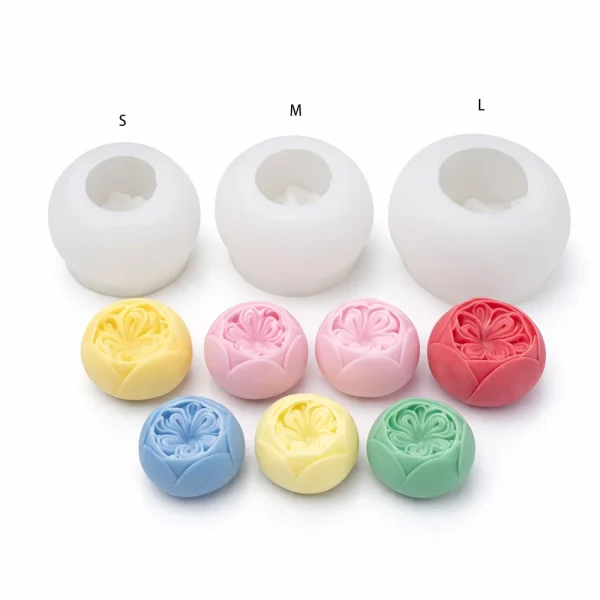
These ready-made molds are used as visual references rather than substitutes for a custom engineering review. A comparatively open form and a deeper patterned form create different filling, detail, and demolding questions.
Comparatively Open Release Geometry
A rounded body and accessible opening can simplify demolding, but petal detail still needs clean surface transfer and enough local strength around thin edges.

Deeper Form with Fine Surface Detail
A narrow crescent profile and dense pattern place more emphasis on filling direction, trapped-air points, detail inspection, release access, and local tear exposure.
What a Sample and First-Cast Test Must Prove
Sample approval is where technical assumptions become observable results. A photograph of an empty mold can confirm appearance, but it does not reveal incomplete filling, trapped air, difficult release, unstable walls, flash, seam visibility, or damage around thin details.
The sample stage needs a defined purpose. Depending on project risk, it may confirm the digital model, master surface, mold structure, support fit, cavity alignment, critical dimensions, casting result, or packaging method. Not every project requires every test, but omitted checks should remain understood before approval.
Approve the reference
Confirm the model, master, opening method, finish, material, and critical dimensions by version.
Inspect the mold
Check missing detail, contamination, repair marks, seams, alignment, support fit, and visible defects.
Run the first cast
Use a relevant casting material when practical and record filling, curing, demolding, and trimming results.
Close every issue
Mark the defect, identify the source, record the correction, and approve the updated version.
The first cast tests both the part and the mold
Review the casting for incomplete filling, bubbles, seam marks, flash, deformation, surface transfer, and dimensional problems. Then inspect the mold for stretching, cuts, stress whitening, weak edges, poor closure, or movement inside the support.
A defect record becomes useful when it includes a clear photograph, marked location, short description, likely source, proposed action, and approval status. The source may sit in the digital model, master, parting design, silicone choice, casting process, or handling method. Changing the wrong stage can hide one problem while creating another.
How the Approved Sample Becomes the Production Standard
Bulk production adds repetition, schedule pressure, multiple operators, material batches, inspection steps, and packing risks. Reliability depends on whether the approved sample remains the working reference after production starts.
Change control protects the approved version
A moved logo, revised dimension, different surface finish, or adjusted opening can affect the master, mold structure, inspection method, cost, and delivery plan. Each change needs a revision number, impact note, approval status, and clear identification of obsolete files.
This record prevents a common problem: the buyer approves one sample while production follows a later, undocumented variation. It also clarifies whether a modification is included in the original scope or requires new model, master, sample, or tooling work.
Inspection follows project risk, not a generic checklist
Critical dimensions, cavity alignment, opening geometry, support fit, visible surfaces, logo position, and release areas often deserve more attention than nonfunctional sections. The inspection plan should identify those features and define how they are checked.
Traceability can remain practical. Production dates, batch references, inspection notes, photographs, sample labels, and packing records may be enough when they connect a delivered mold to the approved standard. For material-sensitive projects, request the current TDS, SDS, available test documentation, or an agreed sample test for the exact silicone under review.
Packing is part of production control
A correct mold can still arrive deformed if it is compressed, folded without support, exposed to dust, or allowed to rub against hard parts. The packing method needs to protect the cavity, openings, thin edges, and support pieces throughout storage and transport.
Production Proof
Approved reference
The factory record identifies the exact sample, material, structure, finish, and packaging standard used for production.
Production Proof
Critical inspection points
Checks concentrate on features that affect assembly, appearance, release, support, or casting performance.
Production Proof
Traceable issue handling
Problems link to photographs, batch or sample references, cause review, corrective action, and a documented next step.
Warning Signs Hidden Behind a Fast Quotation
Speed is useful when the technical review remains specific. It becomes a risk when a detailed custom project receives instant approval from one photograph, one overall dimension, and a quantity. The same applies to impressive certificates or company presentations that do not connect to the material, geometry, or acceptance standard being quoted.
No project-specific questions
Undercuts, release direction, casting material, critical dimensions, use frequency, and visible surfaces remain unconfirmed.
One standard solution
The same hardness, wall structure, and opening method are offered for every geometry without explaining trade-offs.
Sample without acceptance criteria
A sample is promised, but nobody defines what it must prove or how defects and revisions will be closed.
Unclear quotation scope
Modeling, master work, support, first-cast testing, packaging, and later revisions may appear as unexpected additions.
Production differs from approval
The approved sample is not identified as the production standard, and materials or finishing can change without confirmation.
Weak issue handling
Problems receive blame or a vague remake promise instead of evidence collection, source analysis, and a written action.
Communication also reveals how the project is being managed. A useful reply refers to the actual geometry, such as a narrow opening, deep recess, fragile texture, support shell, or filling orientation. Repeated claims about experience and service do not replace those decisions.
- The reviewed design version and unresolved assumptions.
- The proposed opening, parting, venting, wall, and support approach.
- The silicone recommendation and the reason behind it.
- The sample scope, first-cast check, and correction process.
- The production reference, critical inspection points, and packing method.
- Quotation exclusions, schedule conditions, confidentiality, and change control.
Reliability Scorecard for a Custom Mold Project
A scorecard turns a general impression into a comparison based on evidence. The categories do not need equal weight. Release design, material suitability, and sample performance deserve more attention when a project contains deep undercuts, narrow openings, fragile details, mating surfaces, or repeated production use.
A ready-made mold may be enough when
- A standard shape and available cavity size already meet the requirement.
- The project is a limited trial, studio run, or early market test.
- Exclusive geometry, controlled branding, and confidential files are not involved.
- Existing seam placement and cavity layout are acceptable.
Review cavity dimensions, casting compatibility, release difficulty, and handling before ordering from the silicone molds catalog.
A custom project is the stronger route when
- Shape, dimensions, logo, finish, or cavity layout must follow a defined specification.
- Undercuts, narrow openings, fragile details, or support needs require engineering review.
- The mold must fit a repeatable casting, assembly, or packaging process.
- Sampling, revision control, confidentiality, and repeat production matter.
Send the latest design, key dimensions, casting material, expected use frequency, quantity, and deadline for a technical review.
Review a Custom Mold ProjectFrequently Asked Questions
What evidence matters most before choosing a silicone mold maker?
Start with project-specific evidence: a feasibility review, proposed opening and parting logic, material reasoning, sample scope, first-cast criteria, revision control, production inspection points, and quotation boundaries. General factory claims are less useful when they do not connect to the actual geometry and casting process.
Is a 3D drawing enough to approve a custom mold?
No. A 3D drawing describes the intended shape, but it does not confirm the parting line, release path, venting, support, master finish, silicone behavior, first-cast result, or production consistency. Those decisions need separate review and approval.
Why is a first-cast test more useful than a mold photograph?
A first cast can reveal trapped air, incomplete filling, seam visibility, flash, deformation, surface-transfer problems, difficult release, and stress around thin details. It also shows whether the mold and its support remain stable during actual use.
What documents may be needed for material approval?
The exact requirement depends on the application. Buyers may request the current TDS, SDS, available test records, material identification, or an agreed sample test. Documents need to match the silicone material and approval condition under review rather than serving as generic company evidence.
How can buyers prevent the production mold from differing from the approved sample?
Identify the approved sample and design version in writing, record material and finish, list critical inspection points, and require revision control for every later change. Production photographs, batch references, inspection notes, and packing records can support traceability.
Request a Manufacturability Review Before Production
Share the latest design, critical dimensions, casting material, expected use frequency, quantity, and deadline. BKSilicone can review the structure, identify open risks, explain possible sample stages, and define the information needed before a custom mold moves into production.