
A soap mold does more than give your bars a shape. It affects how you pour a batch, whether you need to cut it, and how easily you can remove the finished shape without damaging the edges.
For a first project, look for a simple shape, a manageable capacity, and a mold the supplier identifies as suitable for your soapmaking method. Decorative details can come later, once you know how your recipe behaves.
Start with the bars you want to make
Before comparing materials, decide whether you want individual bars or a loaf that you will cut into slices.
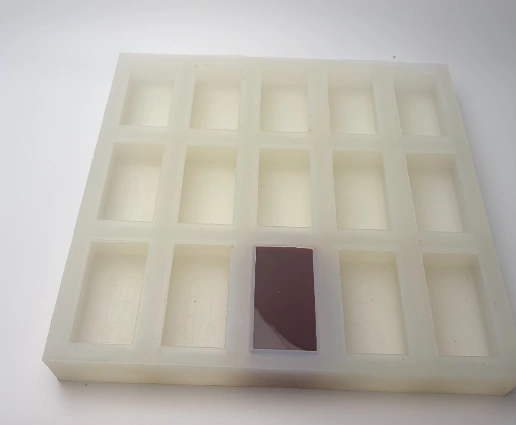
Individual cavity molds give each bar its shape during pouring. They are useful for round, oval, rectangular, or decorative bars and remove the need to cut a loaf. Check the size of each cavity and the number of bars the mold makes.
Loaf molds hold one larger block of soap. After unmolding, you cut the loaf into bars, which gives you control over slice thickness. Remember to plan for a suitable cutting tool and workspace as well as the mold itself.
For your first batch, a plain cavity or straightforward loaf is easier to assess than a deeply sculpted design. Thin petals, narrow projections, and intricate patterns need more care during release. The soap must be firm enough to hold those details.
Compare the material and construction
Material affects how the mold behaves, but construction matters too. Consider the liner, seams, wall thickness, and any support frame as part of the complete mold.
| Mold type | Practical advantage | What to check |
|---|---|---|
| Flexible silicone | The walls can peel away from the soap, helping release shaped bars. | Whether the filled mold needs a tray or supporting box; how to handle delicate details. |
| Wooden mold with a suitable liner | A rigid structure supports a loaf and keeps the sides in position. | The recommended liner and how the loaf will be lifted out. |
| Rigid plastic mold intended for soap | Can provide defined shapes without a separate wooden frame. | Compatibility with your process and temperature, plus the recommended release method. |
| Assembled acrylic mold | Some designs have removable panels that open around the soap. | How the joints are secured, whether lining is required, and how to prevent leaks. |
Silicone is a useful starting point when easy release is a priority. Its flexibility lets you move the mold away from the bar instead of forcing the bar out of a rigid container. That does not make every silicone mold suitable for every recipe or process; check the particular product’s instructions.
Match the mold to your soapmaking method
Check that the supplier recommends the mold for the process you plan to use. A mold sold for baking, resin, or another craft should not automatically be treated as a soap mold.
Cold process soap involves an alkaline mixture, while hot process and melt-and-pour projects also require attention to the temperature at pouring. Ask about compatibility, temperature limits, and any lining requirements before buying.
Avoid aluminum molds for soap made with lye. If the material of an old baking tin or household container is uncertain, choose a mold with clearly identified materials and intended use instead.
Check capacity, dimensions, and support
Look at the internal cavity dimensions, not just the outside dimensions of the mold. The outer measurement tells you how much space it occupies; the cavity tells you about the shape you will pour.
Also check what the listed capacity means. It may describe one cavity, the whole mold, a volume, or an estimated batch weight. Those are different measurements. A stated volume is not a promise of a particular finished bar weight, which also depends on the formula, fill level, and moisture loss.
For a flexible mold, find out how it should be supported when full. Place it on its recommended tray or in its support box before pouring. A mold that needs support should stay supported while you fill or move it.
Read a dimensioned product image carefully
The BK Silicone peony mold shown below illustrates why these measurements should be separated. Its product image labels the outside of the mold as 9 × 5.5 × 1 cm (3.5 × 2.2 × 0.4 in) and the mold weight as 35 g (1.2 oz). Those are mold specifications, not the size or weight of a soap bar. The same image shows separate measurements for the flower and leaf shapes.
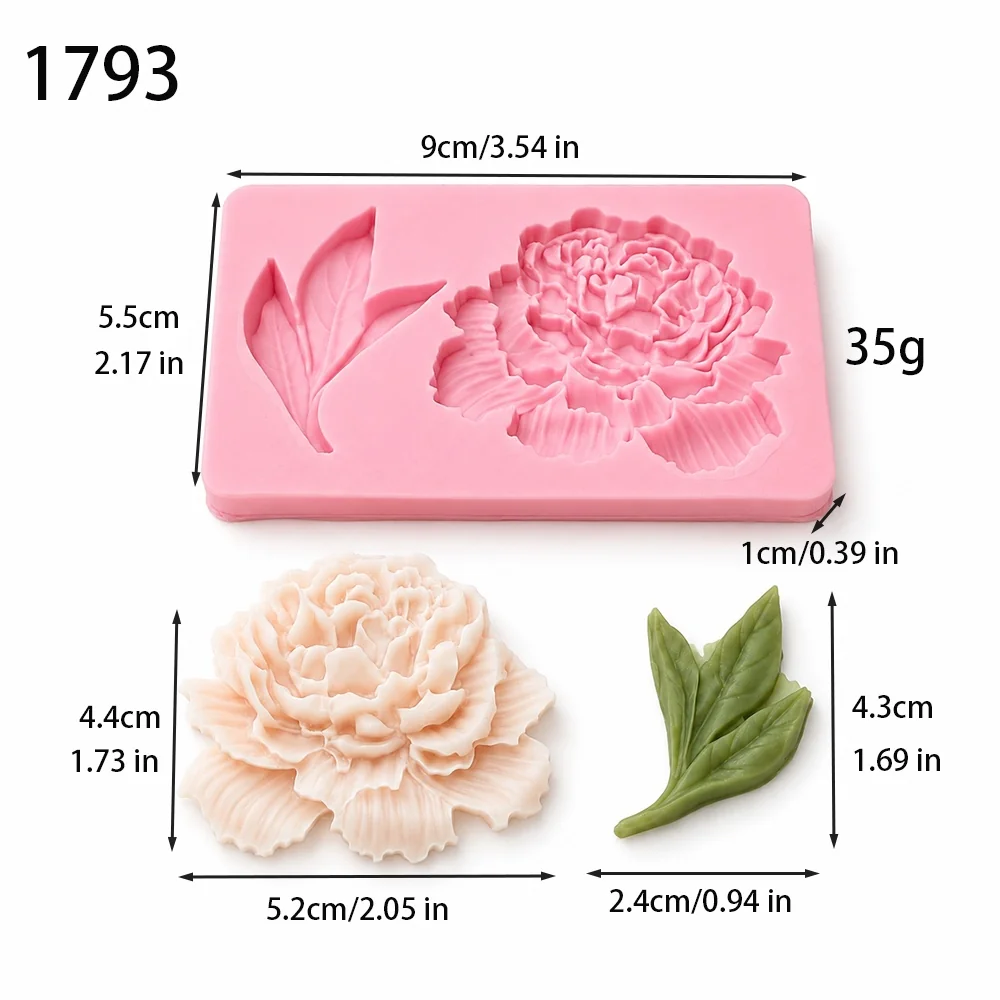
Do not calculate the cavity volume from the outer dimensions. The walls, base, and spaces between shapes occupy part of that volume. For a purchasing decision, ask for usable cavity capacity or check a sample with your intended formula. This matters especially when you need a consistent bar size for a wrapper, carton, or gift set.
Think about release before choosing a detailed design
An attractive pattern is only useful if you can remove it intact. Look at the thinnest parts of the design and consider how the mold will move away from them.
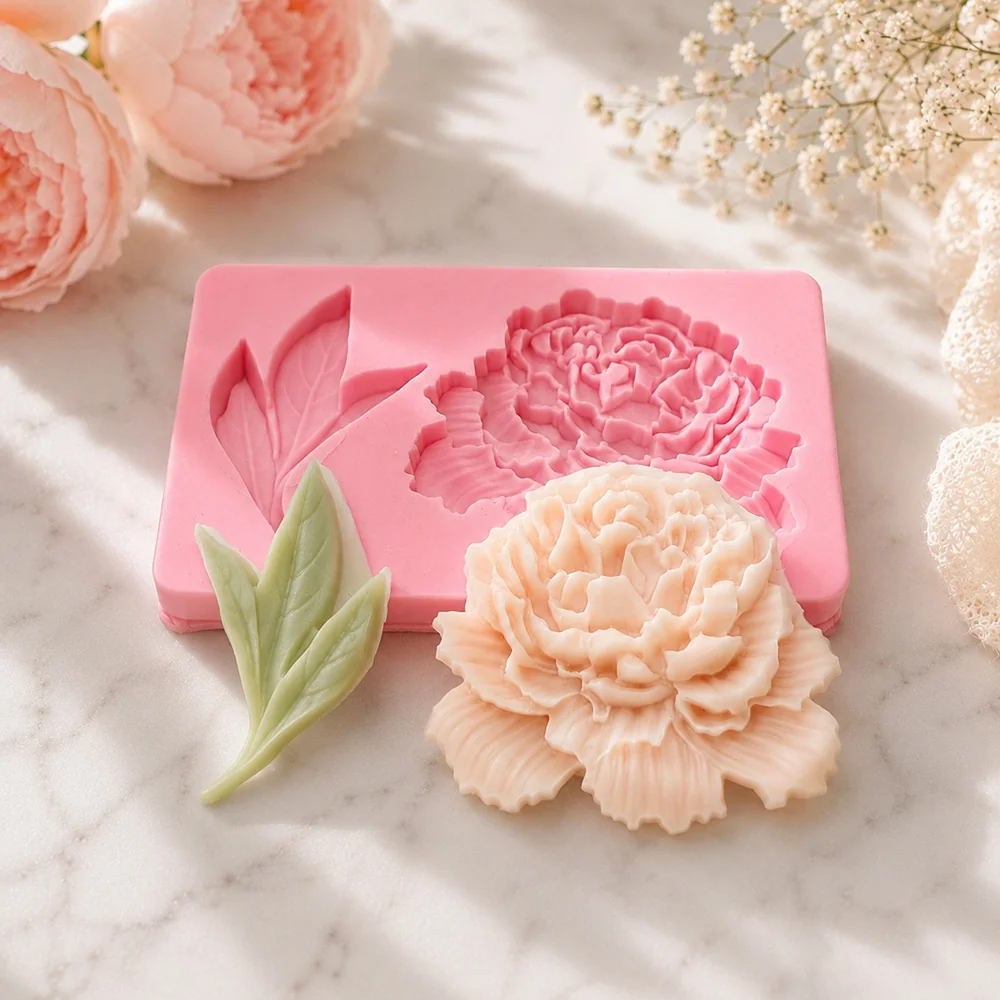
With a flexible mold, release the sides gradually and support the soap as it comes out. Avoid pulling on a delicate edge or using a sharp tool to pry the bar free.
If the soap bends, dents, or smears during removal, stop forcing it. Review its readiness and the recipe’s instructions. Formula, water content, mold design, and conditions all affect how soon a batch can be unmolded, so there is no single waiting time that suits every soap.
Being firm enough to unmold also does not mean a cold process bar has completed curing or is ready to use. Follow the recipe’s curing and safety guidance, and use appropriate protection when handling fresh soap.
A five-step process for choosing your first mold
- Write a short project brief. Note your soapmaking method, the shape you want, and whether the bars will be used individually or packed together. Include any packaging dimensions that are already fixed. A clear brief makes it easier to compare suitable options and prevents an attractive photograph from becoming your only buying criterion.
- Choose the format. Decide between individual cavities and a loaf. For cavities, consider whether every shape is the same or whether the tray contains a mixture of designs. For a loaf, consider the cutting direction, desired slice thickness, and handling space. Check whether a separate support box or liner is supplied.
- Confirm the specifications. Request internal dimensions, usable capacity, intended process, and handling instructions. Keep mold weight, cavity volume, and expected soap weight in separate fields on your comparison sheet. If a seller only provides outside measurements, resolve the missing information before ordering for a fixed recipe or package.
- Evaluate one sample. Use an established recipe and the mold maker’s instructions. Observe filling, wall support, release, and the condition of delicate edges. Record the actual fill quantity and the finished dimensions after the appropriate curing or conditioning period. A small evaluation is more useful than assuming that a different maker’s batch will behave exactly like yours.
- Review the complete working setup. Check that the mold fits your tray, work area, cutting tools, and storage space. Before a larger order, confirm which components are included and whether the same design and dimensions can be supplied again. Keep your approved sample and written specifications together for comparison.
Common mistakes to avoid
Buying by appearance alone. A deep flower or fine relief can look impressive in a photograph but needs a workable release path. For a first project, start with a design whose edges you can support during removal. Add complexity after you understand your soap’s behavior.
Treating every capacity label as batch weight. A listing may refer to milliliters, an estimated soap weight, or the silicone mold’s own weight. Check the unit and what it describes. Do not increase a recipe simply because the outer dimensions of a new mold look similar.
Moving an unsupported flexible mold. Plan the support before filling. Lifting a full tray by a flexible rim can change its shape or cause a spill. Follow the supplier’s handling instructions and arrange your work area so that unnecessary movement is avoided.
Fresh-soap handling: A mold-selection guide does not replace a complete soapmaking safety procedure. For lye-based soap, use appropriate eye protection, chemical-resistant gloves, protective clothing, and a suitable workspace. Keep children and pets away. Do not test a fresh bar on skin to decide whether it is ready to use.
Five questions to ask before buying
- Is this mold intended for my soapmaking process?
- What are its internal dimensions and usable capacity?
- Does it need a liner, tray, or support box?
- How will I release the soap, and will I need to cut it?
- What cleaning and storage instructions does the supplier provide?
For your first mold, prioritize a simple shape and a clear handling process. Once you have made a few consistent batches, you will be better placed to choose detailed designs, larger formats, or a custom shape.
Ready-made molds, liquid silicone, or a custom design?
At BK Silicone, we offer silicone molds, liquid silicone for making molds, and custom mold development. The right starting point depends on what you want to do yourself.
Choose an existing mold when its shape, dimensions, and intended process match your project. A decorative design such as the peony example above can help you assess the detail you want, but confirm the particular mold’s suitability for your recipe before placing an order.
If you already have a master pattern and plan to make the mold yourself, explore our liquid silicone for soap molds. Liquid mold-making silicone is a material used to create the mold; it is not an ingredient to add to soap. Material selection should account for the master, geometry, and planned casting process.
For a specific bar shape, logo, or cavity arrangement, use our custom silicone mold service. Send a reference image or drawing, desired finished dimensions, soapmaking method, quantity, and packaging constraints. We can review those requirements with you and discuss a suitable mold approach before the details of a quotation are confirmed.