
Proper cleaning and maintenance extends silicone mold lifespan significantly. A well-maintained mold can last 500-1000 casting cycles, while neglected molds may fail after just 50-100 uses. At BKSilicone, we provide maintenance guidance to help businesses maximize their mold investment.
Why Cleaning Silicone Molds Matters
Regular cleaning prevents residue buildup, maintains mold detail reproduction, and extends usable lifespan:
- Residue removal: Casting materials leave residue that hardens over time
- Detail preservation: Clean molds reproduce fine details accurately
- Durability extension: Proper maintenance adds 50-100% more casting cycles
- Production consistency: Clean molds ensure consistent cast quality
- Cost efficiency: Extended lifespan reduces replacement frequency
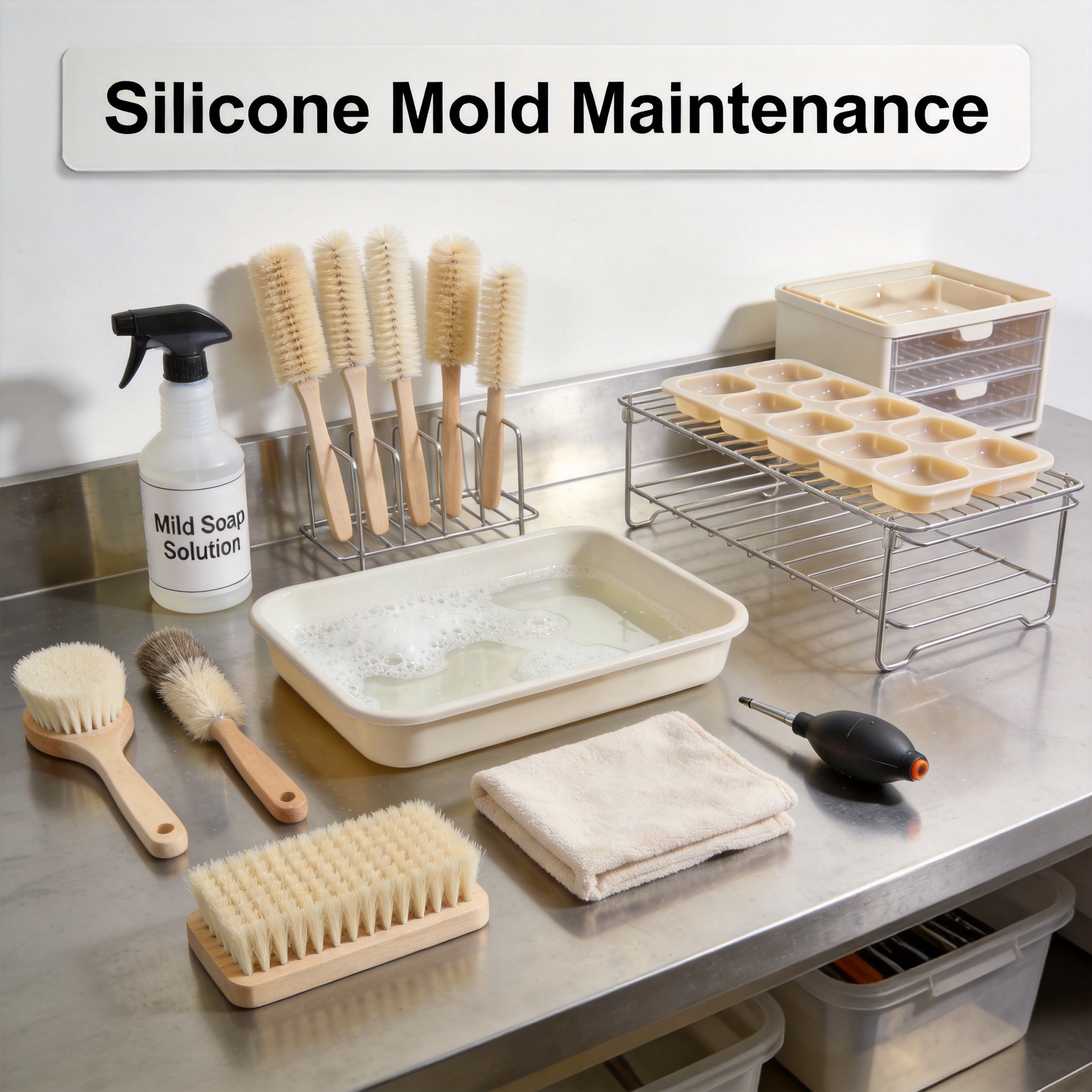
Cleaning Tools and Supplies
| Tool/Supply | Purpose | Notes |
|---|---|---|
| Soft brushes | Remove residue from surfaces | Avoid abrasive brushes |
| Mild soap solution | General cleaning | pH-neutral soap recommended |
| Compressed air | Clear fine details | Low pressure setting |
| Microfiber cloths | Wiping and drying | Lint-free cloths preferred |
| Isopropyl alcohol | Stubborn residue removal | 70-90% concentration |
| Mold release spray | Prevent sticking | Silicone-compatible formula |
5-Step Cleaning Process
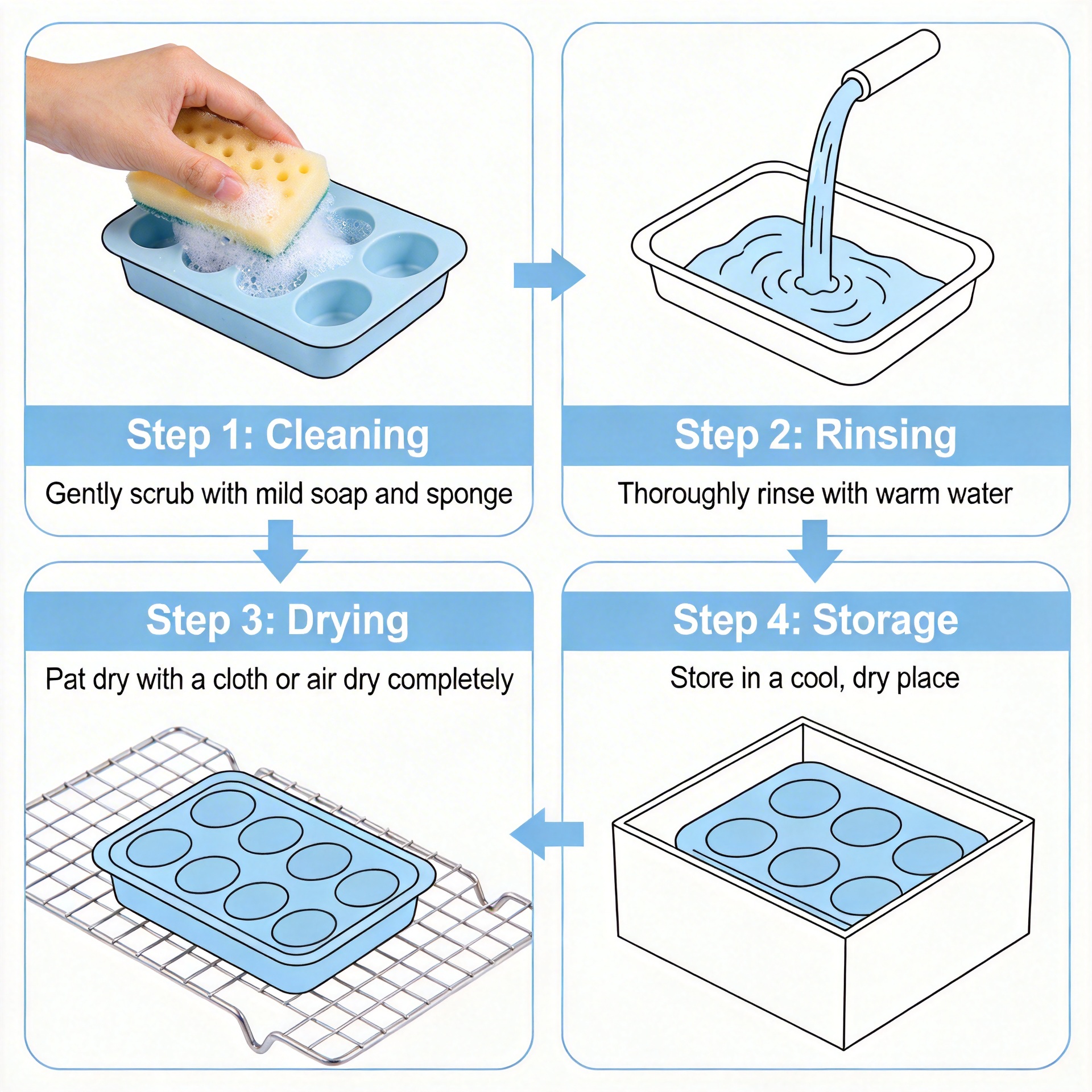
- Remove Loose Residue: After demolding, use soft brushes or compressed air to remove loose casting residue. Work gently to avoid scratching silicone surface. For fine details, use low-pressure compressed air to clear recessed areas.
- Wash with Mild Soap: Prepare mild soap solution (pH-neutral dish soap or specialized silicone cleaner). Gently wash mold surface using soft sponge or cloth. Avoid abrasive tools that scratch silicone. For food-grade molds, use food-safe cleaning agents only.
- Rinse Thoroughly: Rinse mold with clean water to remove soap residue. Soap residue affects casting material compatibility and causes sticking. Rinse multiple times if needed until water runs clear.
- Dry Completely: Air dry molds in clean environment for 2-4 hours. Alternatively, use compressed air for faster drying. Ensure complete drying before storage – moisture causes issues during next casting cycle. Avoid heat drying unless silicone formulation specifically allows it.
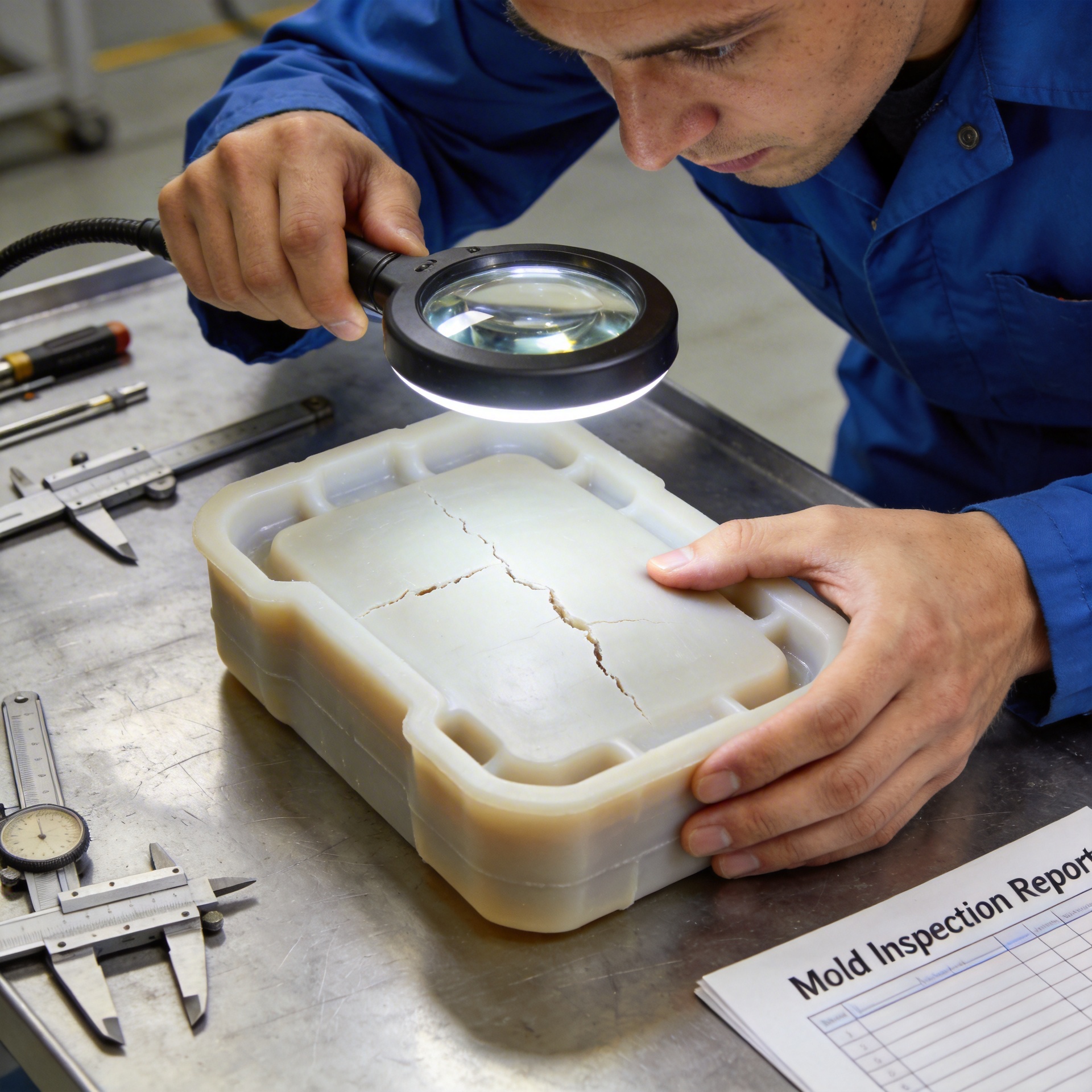
- Inspect for Damage: Check mold surface for tears, cracks, permanent deformation, or surface degradation. Small tears grow with continued use. Document damage locations. Replace molds showing significant wear before catastrophic failure.
Common Cleaning Mistakes
⚠️ Warning: These mistakes cause premature mold failure.
- Mistake 1: Using abrasive tools – Wire brushes, scrapers, and abrasive pads scratch silicone surfaces. Scratches become stress points leading to tears. Use soft brushes and sponges only.
- Mistake 2: Skipping cleaning between cycles – Residue accumulates and hardens over time. Clean molds after every casting cycle without delay.
- Mistake 3: Incomplete drying – Moisture trapped in silicone causes casting issues. Ensure complete drying before storage.
- Mistake 4: Using harsh chemicals – Strong solvents degrade silicone over time. Use mild soap and silicone-compatible cleaners.
- Mistake 5: Ignoring damage signs – Small tears and cracks grow during continued use. Inspect molds regularly and replace proactively.
- Mistake 6: Storing wet molds – Moisture promotes mold growth and material degradation. Store only completely dry molds.
Checklist for Silicone Mold Cleaning
- ✅ Clean after every casting cycle without delay
- ✅ Use soft brushes and mild soap (avoid abrasive tools)
- ✅ Rinse thoroughly until water runs clear
- ✅ Dry completely (2-4 hours air drying)
- ✅ Inspect for damage before next casting
- ✅ Document condition to track wear patterns
- ✅ Use food-safe cleaners for food-grade molds
- ✅ Store in clean, dry environment
- ✅ Deep clean weekly for high-volume production
- ✅ Replace proactively when approaching cycle limit
Maintenance Frequency by Use
| Production Volume | Cleaning Frequency | Inspection Frequency | Deep Clean |
|---|---|---|---|
| Low-volume (1-10 cycles/day) | After each casting | Weekly | Monthly |
| Medium-volume (10-50 cycles/day) | After each casting | Daily | Weekly |
| High-volume (50+ cycles/day) | After each casting | Every shift | Daily |
Special Considerations
Different casting materials require specific cleaning approaches:
- Candle wax: Warm water wash removes wax residue; avoid hot water that damages silicone
- Epoxy resin: Isopropyl alcohol removes resin residue; test compatibility first
- Concrete: Water wash removes concrete residue; deep clean to prevent buildup
- Food materials: Food-safe cleaners only; sanitize after each use
Conclusion
Proper cleaning and maintenance extends silicone mold lifespan by 50-100%. Following the 5-step cleaning process, using appropriate tools, and avoiding common mistakes ensures consistent production quality and maximizes mold investment.
For guidance on silicone mold basics and maintenance best practices, contact BKSilicone for technical consultation.