
Choosing the right silicone mold requires understanding application requirements, production volume, and material compatibility. At BKSilicone, we help businesses select appropriate silicone molds for their specific casting needs. Explore silicone molds for candle, soap, resin, plaster and concrete casting for finished-mold options.
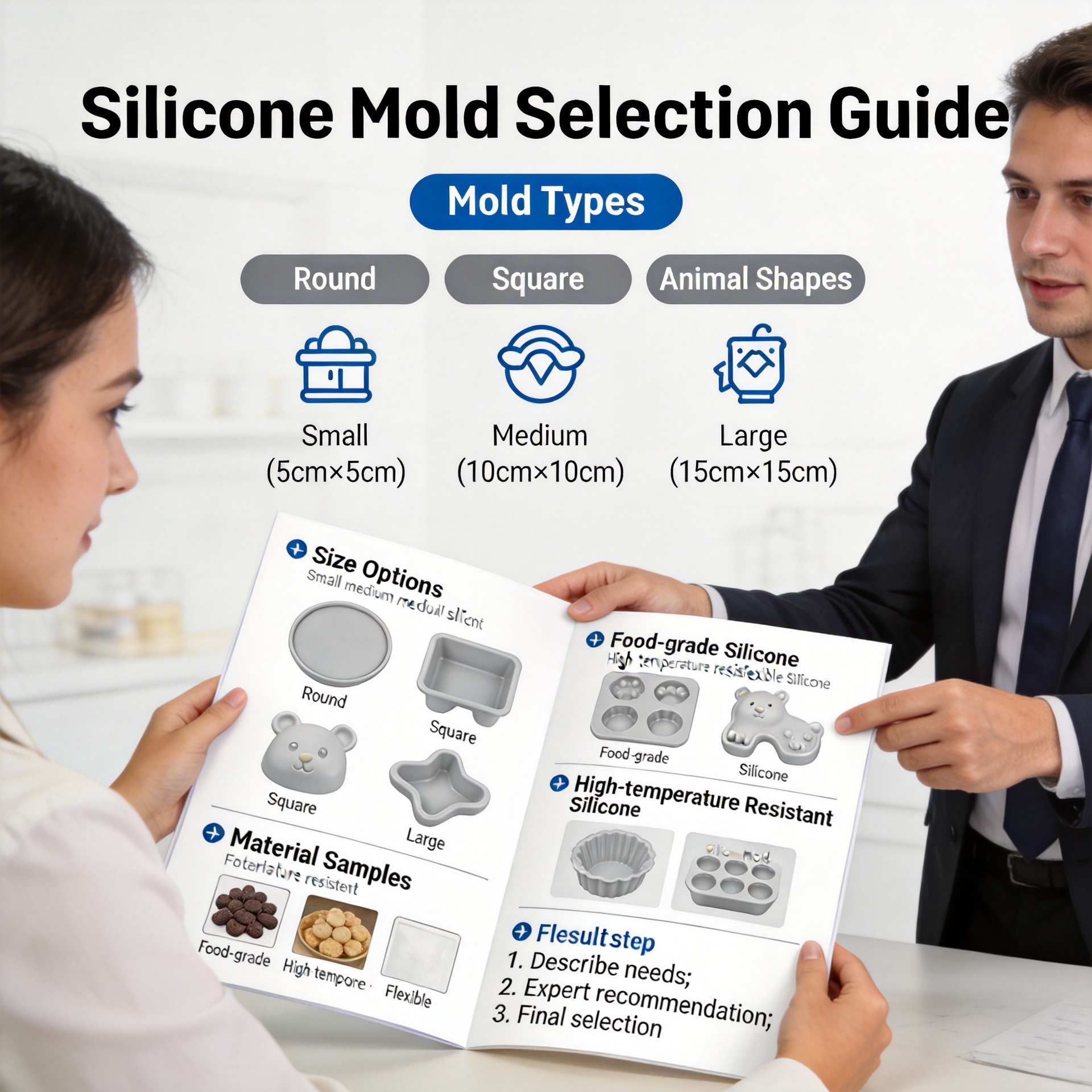
What to Consider When Choosing Silicone Molds
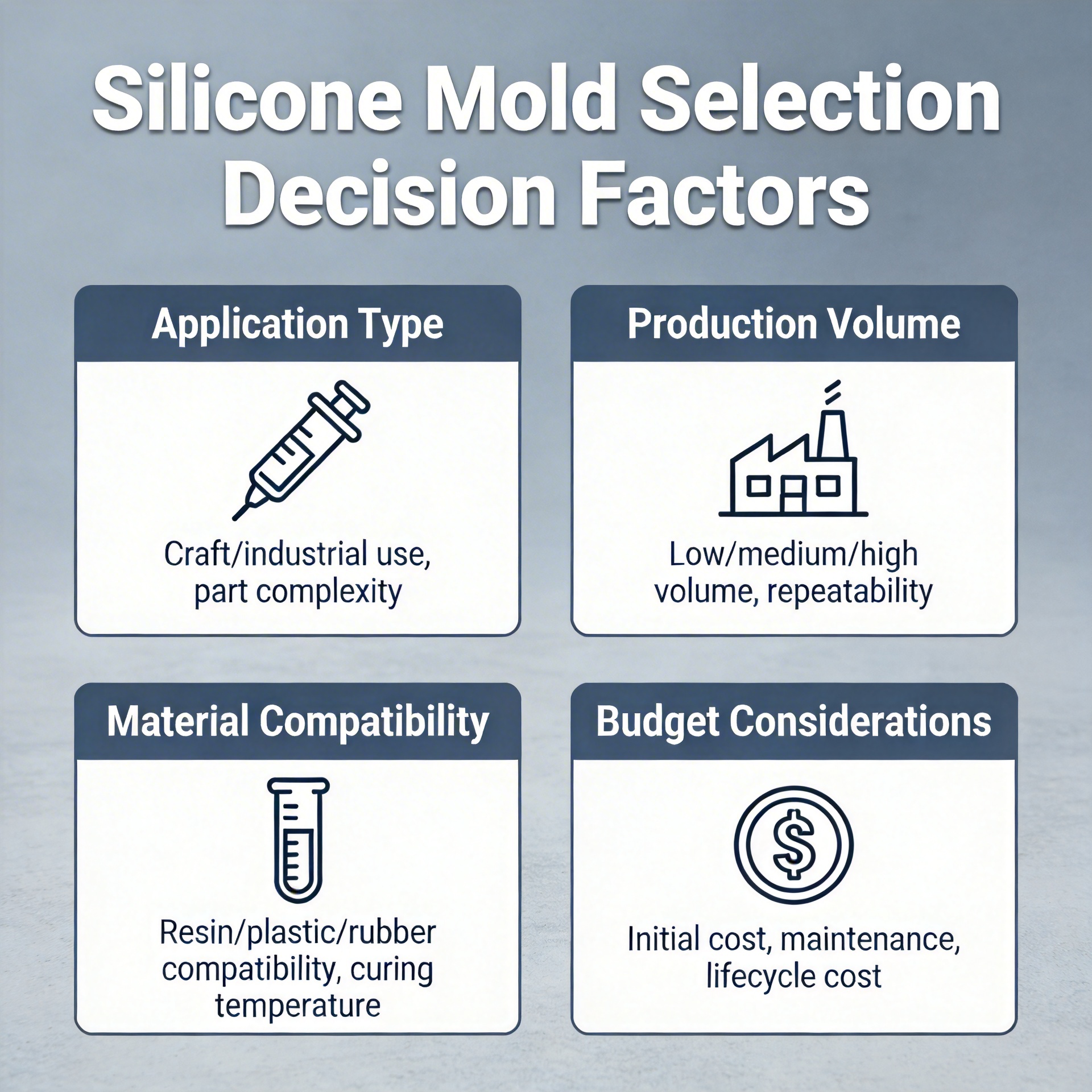
Selecting the right silicone mold involves evaluating multiple factors:
- Casting material type: Wax, resin, concrete, food materials require different silicone formulations
- Production volume: Low-volume custom casting vs. high-volume production
- Design complexity: Simple shapes vs. intricate details with undercuts
- Operating temperature: Room temperature casting vs. high-temperature materials
- Budget constraints: Tooling cost vs. per-unit production cost
- Lifespan requirements: Expected casting cycles before replacement
Silicone Mold Types Comparison
| Silicone Type | Best Applications | Lifespan | Cost Range |
|---|---|---|---|
| Platinum Cure | Food molds, high-detail casting | 1000+ cycles | Higher ($50-100/lb) |
| Tin Cure | Industrial casting, concrete | 200-500 cycles | Lower ($20-40/lb) |
| Food-Grade | Chocolate, candy, baking | 1000+ cycles | Mid-range ($30-60/lb) |
| High-Temperature | High-temp casting, automotive | 500-800 cycles | Higher ($60-120/lb) |
5-Step Process for Choosing Silicone Molds
- Identify Casting Material: Determine what material you will cast (wax, resin, concrete, food materials). Different materials require specific silicone formulations for compatibility and optimal performance.
- Calculate Production Volume: Estimate annual casting cycles needed. Low-volume projects (50-200 cycles) can use budget silicone, while high-volume production (500+ cycles) requires industrial-grade silicone.
- Assess Design Complexity: Evaluate design details, undercuts, and texture requirements. Intricate designs require higher-grade silicone with better tear strength and detail reproduction.
- Determine Operating Temperature: Check material pouring temperature. Candle wax (160-180°F (71°C–82°C)), resin casting (room temperature), concrete casting (ambient), high-temp applications (200-500°F (93°C–260°C)) require appropriate silicone grade.
- Set Budget and Timeline: Balance tooling cost vs. per-unit production cost. Custom molds take 3-4 weeks; catalog molds ship faster. Choose based on urgency and budget availability.
Common Mistakes When Selecting Molds
⚠️ Warning: Avoid these mistakes when choosing silicone molds.
- Mistake 1: Choosing wrong silicone type – Using tin-cure silicone for food applications violates safety regulations. Always verify silicone certification.
- Mistake 2: Ignoring production volume – Low-quality silicone fails after 50 cycles, while industrial-grade lasts 1000+ cycles. Calculate total production needs.
- Mistake 3: Overlooking material compatibility – Some resins react with certain silicone formulations, causing sticking or degradation. Test compatibility first.
- Mistake 4: Underestimating detail complexity – Budget silicone tears during demolding of intricate designs. Use higher-grade silicone for complex parts.
- Mistake 5: Skipping lifespan calculation – Mold cost per cycle matters more than initial price. Calculate long-term cost before selecting.
Checklist for Silicone Mold Selection
- ✅ Identify casting material type (wax, resin, concrete, food)
- ✅ Calculate expected production volume (annual cycles)
- ✅ Assess design complexity (detail level, undercuts)
- ✅ Determine operating temperature range
- ✅ Check material compatibility (casting material vs. silicone)
- ✅ Verify industry regulations (food safety, medical standards)
- ✅ Set budget for tooling and production
- ✅ Establish replacement timeline
- ✅ Request supplier certification
- ✅ Calculate total cost per cycle
When to Choose Custom Silicone Molds
Custom silicone molds become necessary when:
- Standard catalog molds cannot meet design requirements
- Unique shapes or proprietary designs needed
- High-volume production requiring consistent quality
- Industry-specific compliance requirements (food-grade, medical)
- Specific material compatibility needs
At BKSilicone, we offer custom silicone mold making service for businesses requiring bespoke mold solutions.
Conclusion
Choosing the right silicone mold requires evaluating casting material, production volume, design complexity, operating temperature, and budget. Following the selection checklist helps businesses make informed decisions and avoid costly mistakes.
For guidance on silicone mold basics and selection assistance, contact BKSilicone for technical consultation.